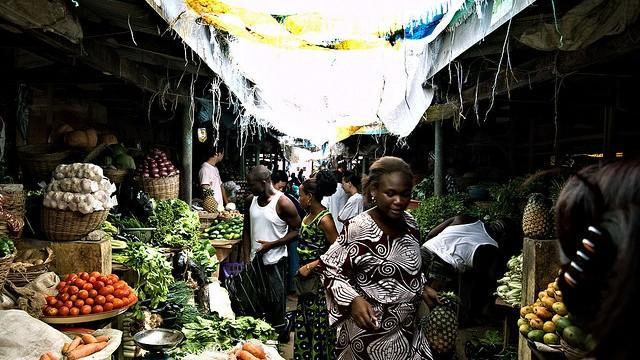
The price of goods and services in November rose for the third-straight month since Nigeria shut its land borders, raising concerns on the state of local production to plug supply gaps.
Headline inflation reached a 19-month high of 11.85 percent in November, the highest since May 2018 when the numbers showed up at 11.61 percent in line with analysts’ expectation.
However, both food and core inflation moved up to 14.48 percent and 8.99 percent, respectively, according to Consumer Price Index (CPI) report released by the National Bureau of Statistics (NBS) on Tuesday. On a monthly basis, headline inflation slowed to 1.02 percent.
Core inflation measures change in the costs of goods and services excluding food and energy.

Concerns about rising price levels come at a time the Central Bank of Nigeria (CBN) hoped it was nearing its 6-9 percent inflation target, amid authorities’ claim that the country was close to attaining food sufficiency.
The CBN earlier admitted that inflation was accentuated by the border closure, an expected temporary food supply shock and hoped it would adjust over the medium-to-long term as the economy increases investments in food production.
Ken Ife, ECOWAS economist consultant, said effort should be targeted towards boosting agricultural production to meet people’s needs.
According to NBS figures, the rise in food inflation was caused by increases in prices of bread, cereals, oils and fats, meat, potatoes, yam and other tubers, and fish.
On month-on-month basis, the food sub-index increased by 1.25 percent in November 2019, down by 0.08 percent points from 1.33 percent recorded in October 2019.

Core inflation, which showed a marginally month-on-month decline in October, went up to 8.99 percent.
“Core inflation has been 8.86 percent to 8.8 percent. For over a year our core inflation has been within the target of the CBN excluding the food basket. So what is giving us the rise in inflation is the food basket which has been all high around 13 percent,” Ife explained.
Speaking further, he stressed that even the rise in the food prices is as a result of the enormous pressure on the local production system as there have been various forms of crisis in the country which have led to destruction of farmlands and the entire agriculture system.
“We have seen several issues which have affected our production level. Like in the North East people have been expelled from their farms because of the Boko Haram insurgency, leading to expansion in the IDPs, but they still consume food. To the North West we have bandits that have displaced a lot of farmers, in the Middle Belt we have clashes with herders, kidnappers which have forced farmers out of their farms,” he said.
“Again, the massive smuggling and dumping of foreign agricultural produce as well as export of agricultural produce to the neighbouring countries leave us with scarcity, hence we have increase in prices,” he further said.
Ife stressed on the need to deepen investment in crop processing facilities, adding that huge percentage of locally produced crops do not make it into the food chain because of post-harvest losses.
The NBS report also indicated that urban inflation rate increased by 12.47 percent (year-on-year) in November 2019 from 12.20 percent recorded the previous month.
Rural inflation rate also accelerated to 11.30 percent in November 2019 from 11.07 percent in October.
On a month-on-month basis, the urban index rose by 1.07 percent, down by 0.08 from 1.15 percent recorded in October 2019, while the rural index also rose by 0.98 percent, down by 0.01 from the rate recorded in October 2019 (0.99) percent.
Ebere Louis, an Abuja-based economist, said that considering the target of the government, there is need to ensure a low and stable inflation rate as it remains the best bet for economic growth and as businesses at this time will expect the CBN to increase the interest rate which again may increase the cost of borrowing and slow the economic growth
“Inflation, which means a rise in the cost of materials, is not really bad in itself but in the context of the Nigerian economy, this will only deepen the sufferings and hardship faced by the common man in Nigeria, if not properly managed,” Louis said.
“The rise which is not just happening for the first time could also signal greater volatility and uncertainty in the economy and this will make businesses uncertain about costs, disrupt business plans, and cause some to hold back investment decisions,” he said.
“On the agriculture side, another issue is dumping and smuggling. We tend to patronise more of the goods we import into the country and this affects our ability to produce more,” he further said.
Louis said that efforts should be heightened to balance both the agricultural production as well as the monetary policies to create economic value.
CYNTHIA EGBOBOH, Abuja