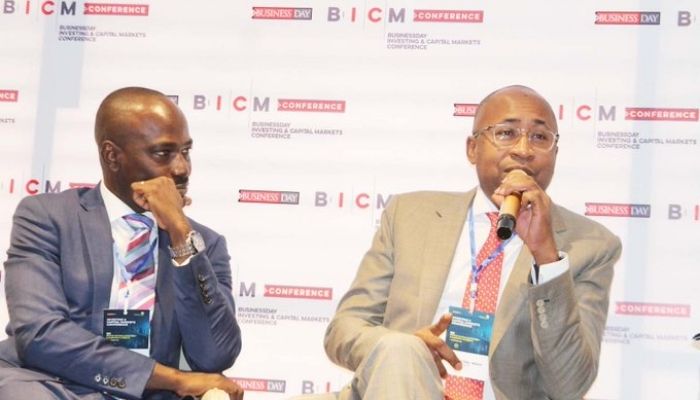
Investment experts on Thursday charged industry regulators on effective corporate governance as a tool for attracting investment and growth.
Stakeholders, while speaking at the BusinessDay conference on Capital Market, with the theme “ market recovery, innovation and regulation in Nigeria.”
Mary Uduk, Director General DG, Securities, and Exchange Commission SEC, in her remarks, decried the negative effect of poor corporate governance, adding that “ this has chased people out of the capital market in the past”
She, however, noted that hope is not lost as “ efforts are ongoing to ensure effective regulation of firms”

READ ALSO; Seven reforms that will make Nigeria’s petroleum downstream sector competitive
“With the introduction of scorecards to measure the direct compliance of firms in terms of corporate governance, we have discovered a huge growth from where we used to be and we have made it mandatory for all firms to comply with the code.”
She said that a proper understanding of how the market operates is critical to ensuring proper investment decisions.
Ayotunde Owoigbe, Partner, Banwo and Ighodalo in her contribution, attributed the tremendous growth in the banking sector to the strong corporate governance guiding its operation.
According to her, the nation over the years recorded tremendous growth in the banking sector by ensuring effective corporate governance among banking firms in the country.

She stressed that since the 2009 tsunami in the banking sector, which was characterised by irregularities, conflict of interest, outright corruption as well as poor operation of board members, there has been changes and better coordination in the sector, due to strong corporate governance policies
“No Bank Director can be as reckless and daring as it was before 2009, but now we have moved forward especially in our rules and guidelines”.
Tolu Osinibi, MD FCMB Capital, in his remark agreed with others that promoting corporate governance amongst firms is critical as it promotes better brand equity for the firms.
Osinibi, however, stated that the absence of penalties for defaulters has been discovered and regarded as a loophole in ensuring effective corporate governance amongst firms, especially in the banking sector.
“Introducing the corporate governance code is the right step but we need to ensure that there are consequences for non-compliance”, he said.
Abimbola Kasim, Vice President Corporate Finance, FCMB capital, speaking on “ Localizing Global Innovations for the Nigerian Capital Market” observed that “finTechs will continue to disrupt the normal traditional systems”
“We now have finTechs that will fast track transactions in two minutes and you probably get as much as you want.
Kasim who observed that the FinTechs are growing stated that it will continue to define the future growth of the nation’s economy.
“So, we need to see ways where and how we can harness the potential of stock market participants.
“So they will define what the stock exchange is currently doing, where they are trying to bring these market participants together”
Kasim who spoke on the need for innovative ideas to create necessary products for the capital markets cited the existence of over N9.4trillion Pensions fund assets and urged players in the sector to come up with products that can harness the pension potential
“The interesting thing is that the rules, the rules about instruments that these funds can be put into are already in existence. About 2 years ago, we got the approval of the SEC to launch an infrastructure fund which we raised about N20billion and this was the first of it’s kind”
“So typically when you are doing and IPP plan you are looking for 200 million dollars but there are some infrastructures that you do not need much so, that was the gap we wanted to fill and we did fill it.
“We did about 20billion and it is up and running and I think we all need to put our thinking caps on and the regulations are there and we can do more with those funds.
“The PFA will tell you that their loyalty is to the RSA holders. They want to invest responsibly and we should allow them to do so by following the regulations. So, everything is there, you can invest in infrastructure, we are looking at more infrastructure funds to finance all these deficits.