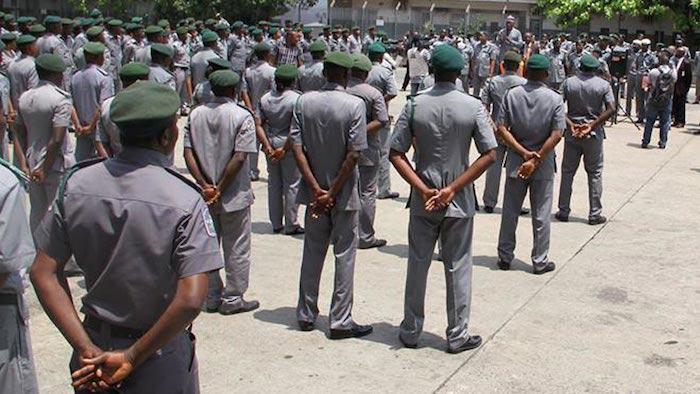
Shippers have raised concern over the new directive of the Nigeria Customs Service (NCS), mandating its officials to examine containers and other cargoes destined for inland container depots (ICDs) also known as Dry Ports.
According to them, the new Customs’ directive would defeat the gains of Ease of Doing Business – which centers on trade facilitation and decongestion of the seaports in Lagos.
The directive, which was issued by Hameed Ali (rtd), comptroller-general of Customs, has enabled Customs officials in Apapa and Tin-Can Island Ports as well other approve entry points to hold, open and examine all containers and other transit cargoes destined to inland dry ports at Kaduna and Kano.
Recall that at the commissioning of the Kaduna Port, President Muhammadu Buhari directed Customs and all other agencies in the trade value chain not to introduce bottlenecks that would hinder the patronage of the dry ports by shippers.
Contrary to this, Ali ordered that all cargoes destined for the dry ports should be opened and examined at the seaports in Lagos before transferring them to the inland ports.
Kaduna port has been designated as port of origin and destination, meaning that goods are exported and received at the Port while the job of examination of the consignments is also done there by Customs officials present at the Kaduna port.
“This is what we call multiple checking of containers that have not gotten to their destinations. The idea is not proper because these consignments are supposed to be treated as transit cargoes, and we, the Customs Licensed Agents are seriously against this directive,” said Tony Anakebe, managing director of Gold-Link Investment Ltd, a Lagos based clearing and forwarding firm.
Anakebe, who spoke to BusinessDay in a telephone interview, said that the directive will also result to increase in cost of doing business at these Inland Ports.
“It will constitute more demurrage for cargo owners because instead of such containers being on transit upon arrival at the seaport, it will be delayed for days to enable Customs to examine the cargoes before they are allowed to transit to the destination Port,” he said.
According to him, if Customs continues to open and examine these consignments before moving them to the port of destination, it would also put the safety of the cargoes into jeopardy. It is a cumbersome procedure that would also jeopardise the gains of the Federal Government Ease of Doing Business policy.
Jonathan Nicol, president of the Shippers’ Association of Lagos State, who described the directive as ‘counterproductive’ said containers are examined at the final destination in the presence of the importers or the agents.
“The international best practice is that if a container is on transit, it would not be opened until it gets to the final port of destination, and if the cargo is on transfer, it will go with escort,” he said.
Citing example, Nicol said that moving transit containers from Lagos using the rail, the management of the Nigerian Railway Corporation (NRC) won’t allow anyone to go near the container, which will go with escort till it gets to the port of destination.
“It is at the port of destination that the owner of the consignment will be notified and it will be dropped for examination. It is wrong to open a container in the absence of the importer,” he added.
On his part, Ali attributed the directive to illegalities involved in non-examination of foreign cargoes destined for Inland container terminals in Kaduna and Kano.
“To curb the alleged illegality, all importation must be unsealed, opened, examined to ascertain the content before exiting the mother port,” Ali ordered.
In land Ports provide importers and exporters the much needed facilities to process, package, consolidate, receive and forward their imports and exports without having to physically be at the seaports.
In addition to the Kaduna Inland Dry Port, which is already functional, six other Inland Dry Ports are to be located in Ibadan, Aba, Kano, Jos, Funtua and Maiduguri, which had also been gazetted, are at various stages of completion.