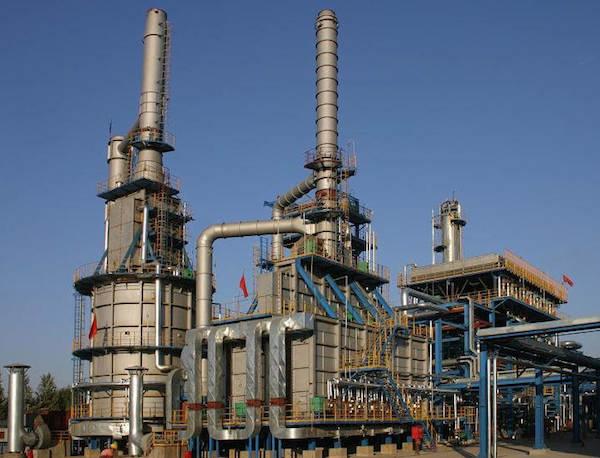
Despite the four Nigerian refineries producing nothing, they are said to have gulped N90.07 billion of public funds in the first seven months of 2019 according to data from the Nigeria National Petroleum Corporation (NNPC). Like we have advocated severally in the past, the refineries are scraps and should be discarded. What is more, the government really has no business running the refineries. It is a disconnect that the Nigerian government is more preoccupied doing what it shouldn’t do while neglecting what it is set up to do.
The huge operating deficit of N90.07 by these refineries is almost double the capital expenditure allocation in the 2020 proposed budget to the ministry of Education (N48 billion) and Health (N46 billion).
Most of the deficit went into personnel cost. The refineries, despite not producing a single drop of fuel, maintains a retinue of full staff who receive full salaries and even go for refresher courses and trainings abroad.
In 2007, just before leaving office, former president Olusegun Obasanjo sold equity stake in the Port Harcourt and Kaduna refineries to a consortium – Bluestar Consortium Limited for a sum of $721 million.

However, the Nigerian Labour Congress, NUPENG, PENGASSAN, and the NNPC strongly opposed the deal and forced the late President Yar’Adua to cancel the sale. Since then, the government has poured in money to turn around the refineries to no avail.
The losses have continued to mount. In 2017, the NNPC sustained a loss of N32.84 billion in running the refineries. In 2018, it sustained further a loss of N131.27 billion, representing a 300 percent surge in operating deficit year on year.
Meanwhile, new refineries are being built at a fraction of that amount. For instance, in 2013, Comico Oil built a 100,000 barrel per day refining capacity refinery for $250 million in Serbia.
This is besides the fact that the refineries are old and obsolete and it will take less to build new ones than to make them operate optimally. The Port Harcourt refinery was built in 1965 and upgraded in 1989. The Warri refinery was built in 1978, while the Kaduna refinery was finished in 1980. Our refineries have an average age of over 30 years. Since they were built, new technology has been introduced making almost obsolete their operating systems.
The decision to pump more money into turning around the refineries rather than selling or discarding them, as aptly described by the common sense advocate, Ben Murray Bruce, is akin to taking for servicing a Mercedes Benz 450SEL 6.9 in the year 2019. The cost of the service will be more than the car’s worth because Mercedes Benz stopped making the 450SEL in 1981. Any part required for the service would have to be custom made from Germany or cannibalised from another Mercedes Benz 450SEL. The repairer, if he were to be honest, will advise the person to buy a new Mercedes because there is nothing as expensive as an old Mercedes.

Other nations are building brand new refineries for less the price we are devoting to servicing our old and dilapidated ones that never seem to work. Nigerians must at all cost prevent the wastage of public funds in the name of operating dead refineries. We need to sell-off these refineries or better still discard them as scraps.