Over a decade ago, consumer goods companies were the stock market bet as investors had forecast that the country’s rising middle class and young population would spur growth. But the consumption slowdown is robbing the sheen off these shares.
The NSE 10 consumer goods index, which comprise of the most capitalized and liquid firms- has fallen since the start of the year. And some of the biggest names have recorded sharp drop in earnings for the first time in 3 years.

Nigeria’s consumption engine is sputtering as the cash crunch caused by a floundering economy has hurt spending even as firms hiked the price of products in 2017 to compensate for rising costs. But it is difficult to shift such costs to already beleaguered consumers, who are not ready to open the purse spring.
Each sub sector of the industry has its own unique challenges. For instance, the beer makers are struggling with lower real income that weighted on spending on alcoholic beverages, while the new excise duties on alcohol introduced by the Federal Government in 2018 has compounded their woes.

Dangote Sugar said in a conference call last month that recurring menace of smuggled sugar remains a severe concern for the growth prospects of the producer of the sweetener. In addition, the Apapa gridlock continues to impact distribution network thus increasing the lead time for product deliveries.
Analysts at Chapel Hill Denham Limited don’t expect Unilever Nigeria to beat their full year 2019 estimate, and they reviewed their forecasts of the company downwards.
Read also: Dangote Flour, Cornerstone, MTNN top as equities gain N267bn in quarter three
Customers are not paying their debts on time, which means credit sales are mounting, while other receivables have continued to rise, hence undermining cash flows.
The cumulative operating cash flow from operations for the 10 largest firms quoted on the floor of the bourse fell by 26.27 pecent to N69.42 billion in June 2019 from N94.15 billion the previous year.
The industry high price to earnings ratio is problematic, which mean they are overvalued, and investing in them could be very risky.
The largest consumer goods firms are trading at a price to earnings ratio of 24.75 times, while Honeywell, Nigerian Breweries, and P z Cussons price to earnings ratio of 110.47 times, 28.89 times, and 27.84 times are above the industry benchmark.
Unilever, Guinness, Cadbury, and Nestle Nigeria are trading at price to earnings of 17.58, 13.77, and 10.21, respectively.
However, Dangote Sugar and Nascon Allied, bucked the trend as they have attractive valuations. The former trades at 6.39 times earnings while the latter, 9.68 times, an entry point for investors that crave for value stocks.
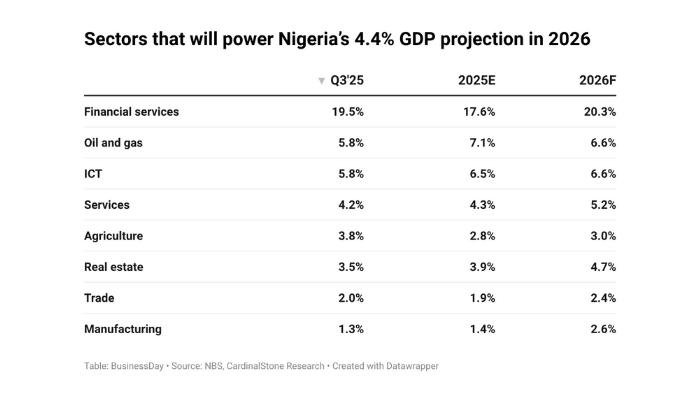
Analysts say investors will only be attracted to a stock when the economic fundamentals are benign, but the Nigerian economy has been stuttering, as GDP expanded by 1.94 percent in the second quarter, lower than the 2.10 percent growth in the first quarter.