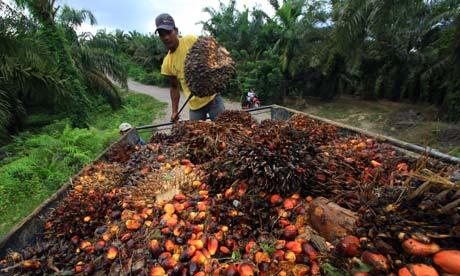
In a bid to protect the Nigerian forest environment and boost local oil palm production sustainably, IDH – the sustainable trade initiative and Solidaridad have collaborated to launch the National Initiative for Sustainable Climate Smart Oil Palm Smallholders (NISCOPS,) Nigeria.
The initiative is aimed at developing the Nigerian oil palm industry through the provision of technical support to smallholder farmers which currently produces 80percent of the country’s total oil palm production.
“We are launching the NISCOPS program that has been put in place by IDH with the support of the Netherlands government and in partnership with Solidarid,” said Chris Okafor, senior program manager, IDH the sustainable trade initiative, during the launch.
“The program is focused on growing the Nigerian oil palm sector that has been abandoned for years. The initiative will look at ways to develop the industry using climate-smart agricultural techniques and making sure that smallholder farmers are not left,” Okafor said.
He defined the landscape approach that will be used in developing the country’s oil palm sector as the process of looking at the activities within the environment holistically and making sure that crops grown on it is being done in a proactive manner that preserve the ecosystem.
He noted that despite the program is currently focused on oil palm but will be extended to other crops in due time. He added that the program will be piloted in Ondo and Edo state.
“We are going to develop a system by bringing together stakeholders and agreeing on the intervention to improve the livelihood of players across the oil palm value chains.”
“We would have them develop a sustainable deliverable mechanism that will include giving trainings to farmers, access to inputs and finance by helping banks de-risk their long term investments to these farmers,” he added.
Since losing its position as one of the world’s largest palm oil producers, Nigeria is yet to recover and take its proper place in the comity of crude palm oil-producing nations owing to the discovery of oil, which changed the country’s palm oil narrative of the 60’s.
As a result, Indonesia and Malaysia have now surpassed Nigeria’s production becoming the global leaders in oil palm production.
Nigeria is currently producing about 970,000 metric tons, making the country the 5th largest palm oil producer behind Indonesia with 36 million MT, Malaysia with 21 million MT, Thailand with 2.2 million MT and Colombia with 1.3 million MT, data in the global oil palm industry shows.
While local consumption is estimated at 2.7 million tons per annum, indicating an estimated demand-supply gap of over 1.7 million MT.
Daan Wensing, global director, IDH Landscapes Program said with the initiative Nigeria’s oil palm smallholder farmers would be able to increase their yields per hectare sustainably, which in turn will boost the country’s total production.
Wesing noted that the NISCOPS project would build on the work IDH has been doing in Nigeria in the past eight years.
“We now want to take these lessons and bring them to the oil palm sector by supporting smallholder farmers with access to finance, good seedlings and markets (local and international),” he said.
Speaking also during the launch, Kene Onukwube, program manager – Oil Palm, Solidaridad West Africa said that his organisation had been working in the Nigerian oil palm value chain and was able to increase the yield per hectare of 1,788 smallholder farmers from 2.7 tons p/h to 10.4 tons p/h.
Onukwube says that the project would consult with key stakeholders at the state levels and replicate the successes made in its previous oil palm programs in Enugu, Akwa Ibom, Cross River, and Kogi states.
Representing the farmers, Adebola Bolariwa, chairman, National Palm Produce Association of Nigeria (NPPAN), Ondo state chapter said that the program will help farmers increase their yields per hectare.
Representatives from Edo and Ondo state appreciated both organisations for the initiative and for selecting their respective states for the pilot program.