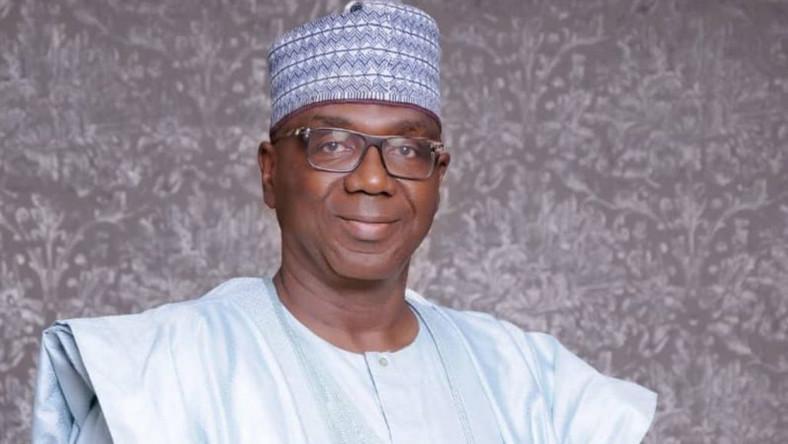
Determined to fix Kwara and change the narratives of the state, Governor Abdulrahman Abdulrazaq has vowed to rebuild infrastructure and human capital development, prioritise education, water, health and as well key into mechanised farming to ensure a better Kwara. The governor, in an interactive session with journalists at a breakfast meeting to mark his 100 days in office, disclosed that the N4.8billion his administration inherited from the previous government is intact, in spite of his commitments on various sectors within the short period he assumed office. SIKIRAT SHEHU was at the session. Excerpts:
You have clocked 100 days in office as the Kwara State governor; could you tell us how the journey has been so far?
We have spent the last 100 days putting in place the basic infrastructural needs of the people that ought to have been done in the past like access to water, access to basic healthcare and repair of dilapidated schools. We have prioritised and will always prioritise water, education, health, road, and general infrastructure. Agriculture is also a priority and we are looking at ensuring that a lot is done is the area
of agro-processing because of our comparative advantage. We met a lot of rots which is daunting and one will think where do we start from? There’s no money to do it. But we just have to be ingenious in the way we do our things and luckily for us, the day we got in, we got N4.8billion. This is a PAYE tax from the Federal Government which was paid on the 28th of May, 2019. It was originally N5.2billion but there were some deductions of 10percent from Abuja, so what we got really was N4.8bn. The previous administration tried to spend that money but thanks to EFCC and others that blocked them off. We’re glad it was blocked. That’s the sort of money we are going to use to fund our education by paying counterpart funding for UBEC and build infrastructure. The money we got is still in the bank, we have not touched it. We will invest it wisely for the state.

It is been tough handling the situation on the ground. It has been more about learning and discovery, because we actually met nothing in terms of basic infrastructure, schools, hospitals, water supply, among others to build on. We had to jettison our manifesto and reset our programmes as a result of that. So, we had to redraft everything we thought we had. During our campaign, we went to schools but we were not granted access. The only school we were able to access was in Kaiama, and that was on a Saturday because they could not resist us.
That was the first sign we saw about the deplorable state of schools. Now, building on the schools, we have nothing. I implore some of you to go to the schools nearest to where you live or where you work and see to confirm what I am saying. We have nothing in the schools. We also discovered that the state is unable to access Universal Basic Education Commission (UBEC) fund due to the mismanagement of the fund by the past governments. In fact, the state was blacklisted since
2013 due to this. The government refused to pay its counterpart fund. But thankfully, we came in to stop the rots in that sector. In 2013, the counterpart fund that the state put down was withdrawn from the bank immediately the UBEC fund came in and they mismanaged the fund. UBEC demanded a refund but they couldn’t refund everything. When we came in, after meeting UBEC in Abuja, they demanded that we pay N450million to be re-certified and we did that immediately. So, we are back on board. The coast is clear but we cannot immediately move to schools now to start repairing until we have properly mapped out to find out which schools to go to, which schools to start with. Right now, UBEC has about N7billion for us and we are asked to look for N7billion to match it to get N14billion to invest in education. So, if we can put N14billion in our education within the next two years, we’ll begin to see the changes in terms of infrastructure and capacity building in our schools.
Moving on to tertiary institutions, our colleges of education are nothing to write home. This is a matter of fact. We all need to visit those institutions to see. When we came in, they were on strike. They’ve been on strike since last year, not paying them a lot of money in excess of N700million. Gladly, we have almost cleared that and by next month, we shall clear the backlog of salaries owed those institutions.
For the Kwara State University (KWASU), Malete, there is an effort going on there. We have set up a visitation panel to go in, look into what is happening there and advise us properly so that we don’t rush into making wrong or biased decisions. The visitation panel will conclude their works in a couple of weeks. That will give us chance to make informed decisions on KWASU issue. In fact, on education, it is a tall hill for us to climb and like I said we are up to the task. It’s just a shame that that sector had been neglected. Government Secondary School, Ilorin, and Queen Elizabeth College, Ilorin, which were the top schools in the Northern Nigeria and in fact, in Nigeria, are now shadows of themselves with infrastructure deficit. And if the top schools are like that, what is the standard of ordinary institutions we have? Basically, virtually, all our schools

do not have toilets. Some NGOs are trying their best to build capacity in the sector. It just shows you the decay in the sector. Also, in the health sector, most of our hospitals are dilapidated. Most of them do not have running water. Kudos to Omu-Aran General
Hospital, which the CMD has tried a lot to keep going. That’s one of the hospitals I went to and they had running water in the toilet and equipment to keep their systems on for medication and pharmaceutical. But going to Lafiagi and Patigi General Hospitals, you will find out that it is one doctor on duty or one doctor in the hospital and two attendants, at the most. The conditions are deplorable; no light. Our hospitals are just treating two ailments – malaria and childbirth. Every other thing is not treated. Basically, we need to build capacity in our health care institutions. We really need to revamp the institutions. We can’t afford to have only one doctor treating everything from pregnancy, performing C-section, he is the dentist, eye surgeon, orthopaedic surgeon and so on. So, they are overwhelmed. We have to come to their rescue. Civil service is bloated, as it is. We have a lot of capacity in the civil service but it’s weighed in the wrong direction. We have a lot of administrative staff and core professionals that can do the jobs in our hospitals. Nurses too have tried a lot. But the challenge is that we can’t pay them enough, especially the nurses. As soon as they serve here for one or two years, they are off to other states with better pay. So, we will look into that. We will find a way of keeping our nurses at home. Also, when we got in, the School of Nursing, Ilorin, had lost its accreditation. We have invested in giving them a
lot of money and they secured their accreditation back. Even, the Harmony Diagnostic Centre, we had to also release money for them to maintain their equipment. So, it was just total neglect in all sectors. The roads are just a shame. The only state roads we have in Kwara are those in Ilorin metropolis. There are no roads in between our towns, even the ones within Ilorin metropolis are in bad shape. It is a
daunting task repairing those roads because Kwara Road Maintenance Agency (KWARMA) that is saddled with the responsibility of fixing the roads is not empowered to do so. We have been forced to embark on fixing of some of these roads during this period of the rainy season, but we just have to take up that to show Kwarans that we are ready to work from the word go. We’re out fixing the roads. Some of the road contracts we met like Ilesha-Baruba/Gwanara road is a sham. They awarded the project at the sum of N1.5billion, they have paid about N1.7billion now. They have revised it to N2.5billion and there is nothing going on there. Anybody that has passed through that road will know that it is not passable, it is not motorable. We don’t know where they put the money spent by the state government on that axis. And even Kishi –
Kaiama road awarded by the Federal Government and the state government took over the road. Federal Government has paid over N1.1billion on the project. All the same, anybody that passes that road will observe that nothing is going on. We don’t know what they have done and it is a shame we have that sort of situation. We are going to work with the
Federal Government to ensure that federal road projects in the state are funded. We have federal roads like Kishi/Kaiama, Share/Tsaragi/Patigi/Kpada roads among others in the state. The contractors handling those projects only returned to site after we have won our elections. The Federal Government has spent about N4billion on that road and it doesn’t look as if N200million worth of work has been done on that road. So, we will force them to do the work. We will work with the Federal Government to get the roads fixed. Those travelling along
Ilorin/Oro road would have seen there is remarkable change in the pace of work going on there. The road is getting better. The contractor is fully on site now. That again is because of change in government. We will not tolerate such things. We’ll make sure contractors perform their duties. And in terms of what we are doing, you will have noticed that we have not awarded any contract. The work that is going on is through direct labour through the ministries and they are doing a very good job. Contracts will be awarded after the state executive council comes into place and the commissioners have been appointed. Still talking about infrastructures, there is still a lot of work to be done. But, we will do it in such a way that every local government will feel the impact of this administration. We will build roads in each local government headquarters. It will not be lopsided, every local government will have its fair share of the revenue allocation.
One of the first issues we tackled is water. While we were campaigning, we keep hearing the word reticulation, and it seems like magic or something being done out of the ordinary. It just means piping and distribution of water. But the word is just a big jargon because water did not get to the people. And the previous government was distributing water with tankers and that’s a shame in this generation. When we went to some water works and we realised that they were just not working for many reasons, including staff who were not happy with conditions of works and Ibadan Electricity Distribution
Company bill not being paid. We met the bill of over N60million for electricity which we have cleared by now. Asa-Dam alone gulps about N10million for electricity bill every month. Consumption of alum is about N10million every month. We now said with all the reticulation or not, where were we before, which areas of town getting water supply and which ones are not getting water? Let’s go back to the basis. Where they were getting water, let’s start, go back and supply them with water. That is what we did. We made sure that parts of Ilorin that were getting water before they started the project began receiving water again. We visited Oyun dam. The dam is beautiful for tourist attraction built by a company called BiWater. In Oyun, there are two water works. The one built by Sardauna of Sokoto, still working but abandoned and the other by Bi-water. They were both neglected. And we have told them to let them work. Also, in Ilorin, when it started working, we lost half of the water, even with the reticulation, pipes were burst and we lost a lot of water. And when you lose water, it costs a lot of money because of the cost of producing the water with labour and chemicals. We were able to fix
some of the water works, the project is an ongoing process. What we have decided is to get a company that will help us look into the whole system of water supply in the state and the company gave us a bill close to N40million and we approached ADB and they promised to do it for us for free which is to assess our water situation and tell us where we are go from here. We instructed them to give us a road map to follow. Our major towns and minor towns should not be using boreholes; we should be able to provide water for them. Boreholes are meant for villages and remote areas but boreholes are the norms now. In Ilorin now, only God knows how many boreholes we have. So, once we have a master plan in place which will take at least two years but in the meantime, we will make sure that we keep pumping water.
Patigi is now getting water from its abandoned water project. Kudos to the Federal government, there is a N3b water project sited in Patigi, the contractor should be on site. But before that comes on stream,
which can take about three years, we should be able to use the system that was in place; the same thing in Lafiagi, Kaiama, Igbaja and other parts of the state. So, the state water corporation is on site to restore water across the state. We are also planning to have a masterplan for the supply of water in the state.
When we talk about water, we talk about the WASH. That is Water Sanitation and Hygiene. That is where we have a serious problem. The problem is huge. Because we have a very dirty environment that we have to tackle. Those following the news will have to notice that in the last one month we have to redo the prime on polio because we have cases of vaccines derived polio which is different from the wild polio. Vaccine derived polio comes from the dirty environment which we have. So, we need to clean up our environment, we need to build public toilets and when donor agencies see that we are serious they will join us. Most of them have lost faith in Kwara and I can assure you that with what we have been doing especially in the healthcare; we’ve paid counterpart funding for most of the programmes available they are beginning to have confidence in us. UNICEF that had abandoned Kwara is now back. So, we will engage all these agencies to join us but importantly, we all have to keep our environment clean, it’s our task individually and also it is one thing for the people to keep the environment clean, it is another thing for the government to evacuate the rubbish. We have also set up a committee in place headed by
Justice Raliat Elelu to look at the issue top down on environment and once they submit their report things will start changing. If you drive through our major roads, you will see rubbish all over the places. But give us time all these will be a thing of the past. It’s been a difficult task cleaning up the mess left by the people that just left ,they just abandoned the state. They were doing nothing, they budgeted for nothing and whatever they budgeted for, we can’t see nothing and how they spent the money. What we know is that we have a huge salary bill. Our average federal allocation is about N3.8bn out of which N2.8bn goes for salaries so we have N1bn left. In that one billion, we’ll do capital projects and the cost of running government. The job is cut for us but with prudent management, we’ll be able to survive and thrive and progress properly as we should.
What are the challenges you face in implementing the 2019 Budget inherited and how are you tackling them?
The budget we inherited is a difficult and tough one and it did not fit into our programmes. It is something we could have continued with but what they appropriated money for and where they appropriated money to is quite different from what we are doing. We could not build on the foundation they had laid. For example, in their budget, there is a
provision for the renovation of schools and when we came in we found that those schools need not be renovated ought to be rebuilt completely. So, that’s not in their budget. The issue of health sector is the same thing. There is nothing in their budget to fix our hospitals. So, we had to review the budget to find money to put in to those projects. For example, we want to build roads in our towns – local government capitals and major towns. There is no provision for that in the budget. That’s why we have to review the budget, to be practical and put money where we want to.
Recently, you held the 2019 Budget review session at the School for Special Needs, why at such a location?
When we set out to review the budget, we spoke with the Permanent Secretary, Ministry of Planning and Economic Development and he said I will need to be at the opening session and I asked for the venue and he said it would hold at one of the government offices. But a week earlier, I was at the School for Special Needs and needless to say, the situation there is appalling. There is no water, the
infrastructure is extremely unpalatable. That’s why I said we should go to the School for Special Needs to hold special budget session there. The idea, for me, is for those that draft the budget and shape our future to come to the institution and while they are preparing the budget they will see what others are going through in that school. That’s the whole idea. The good thing is that all the parastatals came in to defend their budgets and make proposals. For me, if the Ministry of Sports comes in they should think of making provisions for the disabled sports. If the Ministry of Works comes in they will see the
need for infrastructure and see everything that’s lacking in our society in just one institution. One good take away from that was that a day after it went viral online and a company from Lagos came to the school and promised to help us fix the school. That was a major take away. So, we moved the budget session there so that civil servants who shape our future can always see the larger picture of our society.
What will be the areas of priority of your administration in your Budget for 2020?
Priorities of the Budget for 2020 will be water supply because of its importance to our living. We will prioritise healthcare, education, infrastructure, job creation and agro-processing. We’ll build capacity with private sector including in the area of Social Investment Programmes to create jobs and empower more people. Those are our priorities.
There was this Senator Ajadi committee that probed the sales of government properties, what are the highlights of the reports?
The committee did a very good job. They submitted two reports and we’re waiting for the final report. It is unfortunate that from my little reading of it so far, people just shared government property as if it was their fiefdom. They did not even think for one second that it was government property. For example, you give property to Harmony Holdings to invest on behalf of the state as trust and those in
Harmony Holdings just shared the properties among themselves, even selling below the valuation prices. Even those in government did the same thing. There is a new layout called New GRA, none of them went there to build new houses because it was cheaper to pick government houses for next to nothing rather than build their own houses. We will look at the recommendations. In fact, some of them just live in those houses without paying anything while most of them only started paying after the election was won and lost to the extent that the state government does not have enough accommodation to accommodate dignitaries and traditional rulers from other states to host them rather than putting them in the hotel. That’s how they shared the property and we are looking at more than 90 properties which they carved out for themselves. We’ll go back to the report of the panel and make sure the proper thing is done.