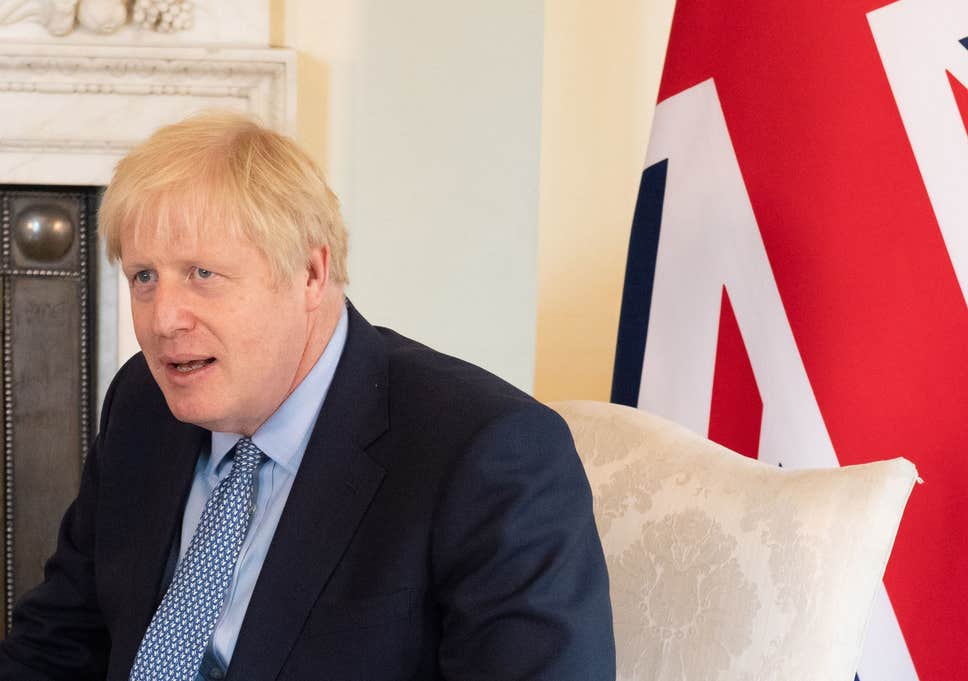
Boris Johnson assumes office as Prime Minister at a fractious time for his party and country, with the Conservative Party’s working majority in the House of Commons (with the support from the Democratic Unionist Party) now just two and a number of pre-emptive ministerial resignations before he took office setting a defiant tone among rebellious MPs within the party itself.
Despite this, Johnson looks set to avoid an immediate challenge to his authority in Parliament and is being given a chance to pursue his Brexit strategy. However, beyond his objective to achieve a “do or die” Brexit on 31 October 2019, there has been much speculation during the Conservative leadership campaign about what that strategy would be once he takes office.
The first step of Johnson’s strategy appears to be to seek to renegotiate the Withdrawal Agreement achieved by his predecessor, Theresa May, before the current Brexit deadline of 31 October 2019. The focus will be the infamous backstop arrangements, which Johnson declared on 16 July 2019 – cannot form any part of Brexit deal negotiations. However, the EU has repeatedly rebuffed such a proposal, stating that negotiations on the Withdrawal Agreement have concluded and cannot be re-opened.
This leads to the second step of Johnson’s Brexit strategy, threatening the EU with a no-deal Brexit. All sides of the Brexit debate, including Johnson himself, recognise this would be an uncertain and potentially disruptive outcome for both the UK and the EU. However, Johnson, and those who supported his leadership bid, claim that the threat of no-deal is necessary to force the EU back to the negotiating table and in order to be successful, the threat must be credible. Supporters of this strategy also point out that it is unlikely to have the desired result until closer to the deadline.

What is the likelihood of a no-deal Brexit – and can it be avoided?
Although it is not Johnson’s preferred outcome, some are concerned that if the attempts to renegotiate a deal with the EU is unsuccessful, Johnson might feel duty-bound to follow through with his promise and pursue a no-deal Brexit on 31 October.
Some politicians in the UK remain firmly against a no-deal Brexit, and have been taking the necessary steps to prevent it from happening. This has stoked fears among some that Johnson’s Administration could seek to frustrate any efforts to prevent a no-deal Brexit, by suspending Parliament shortly before the UK is due to leave the EU, and exclude MPs who want to avoid a no-deal Brexit.
On 18 July 2019, a majority of MPs voted to introduce measures into law that will make suspending Parliament more difficult. However, with or without the suspension of Parliament, MPs alone will not be able to prevent a no-deal Brexit. The legal default position, as a matter of both EU and UK law, is that the UK will leave the EU with or without a deal at 11pm on 31 October 2019.
Therefore, the only available means of avoiding no-deal are for: the UK and the EU to agree a deal that is subsequently ratified and implemented in UK law by Parliament before 31 October 2019; the UK and the EU to agree an extension to the Article 50 period beyond 31 October 2019; or the UK to revoke its notification of its intention to withdraw from the EU under Article 50 of the Treaty on European Union.

The only means of avoiding a no-deal Brexit that is entirely in the UK’s control is to revoke its Article 50 notification. All other means require the cooperation of the EU – which is not guaranteed.
If a Johnson Government wishes to pursue a no-deal Brexit, can it be stopped?
The only guaranteed means of doing so would be for MPs to vote down the Johnson Government in a no-confidence vote. Notwithstanding the latest vote in Parliament, which could be interpreted as a signal of intent by some MPs. It is still unknown whether (and when) a sufficient number of Conservative MPs would be willing to bring down their own government – risking a General Election and a possibly Labour Government, to prevent no-deal.
However, if they do, a new administration ould need to be established either to revoke Article 50 or to request an extension to the Article 50 period before 31 October 2019 otherwise, the UK could still leave the EU with no deal, and perhaps no government. The incoming EU Commission President, Ursula von der Leyen, has stated that she would be open to a further extension of the Brexit deadline “for a good reason” – which certainly includes a General Election or Referendum.
What should businesses be doing to prepare for no-deal?
The above analysis suggests that the threat of a no-deal Brexit is real and will persist, in all likelihood, until the very last days before 31 October 2019. Many companies had already developed a no-deal contingency plan in advance of the original 29 March 2019 Brexit deadline, including securing alternative transport routes, stockpiling products and moving licences to holders in the EU27. These plans should be revisited and updated, and if not already in place – they must be developed.
Many companies did not have enough time to implement all of the actions before the March deadline. This creates a new opportunity for businesses to prioritise what still needs to be done before the end of October, in order to safeguard business operations as far as possible in the event of a “no-deal” exit.
Businesses also need to urgently re-engage with a new team in Government – as there is no surety that prior engagements will carry through. The tone of such engagement may also need to change to reflect the new administration’s Brexit priorities. As the clock ticks towards D-day, businesses need to engage with key Member State capitals which could be influential.
ANDREW EATON