Nicole Veith has become more reticent about her support for US president Donald Trump since pro-Trump signs were stolen from her front lawn and her husband’s car, which sports a “Make America Great Again” sticker, was vandalised.
The 39-year-old mother of seven, who lives in the Philadelphia suburbs, does not drive the car in order to avoid confrontation.
“People are just angry, angry, angry and mean, mean, mean,” she said. “It shouldn’t be a fight, to lose friends over stuff like this, to have family not talk to each other any more just because of politics.”
As a life-long Republican, Ms Veith is increasingly outnumbered in the leafy, middle class suburbs of south-eastern Pennsylvania that were for decades considered strongholds for the GOP. After years of ceding ground, Republicans need to make gains here if Mr Trump is to hold on to Pennsylvania’s 20 electoral college votes in next year’s presidential election.

Three of Philadelphia’s four “collar counties” — Bucks County, Delaware County and Montgomery County — swung for Bill Clinton in 1992 and have not voted for a Republican presidential candidate since. And while Republicans held on to the remaining county, Chester County, through 2012, Mr Trump lost by a 9-point margin there to Hillary Clinton in 2016.
The Democrats made historic gains in local elections in 2017 and in 2018 took four area seats in the US House of Representatives and more than a dozen seats in the state legislature from the Republicans.
Now both parties are turning their attention to 2020. Pennsylvania is a swing state that Mr Trump won in 2016 by less than 1 per cent, or about 44,000 votes. Insiders say the suburbs could be the key to victory when the margins are so thin.
Jay Howser, a Philadelphia-based Democratic strategist, said that given Democrats were likely to be “stuck in the basement” in rural, working-class parts of Pennsylvania where Mr Trump enjoyed high levels of support, the party’s presidential candidate would need to attract more suburban voters to win the state.
“It is important that Democrats nominate a candidate that aligns with suburban voters’ values, but also doesn’t scare their pocketbook,” he added.

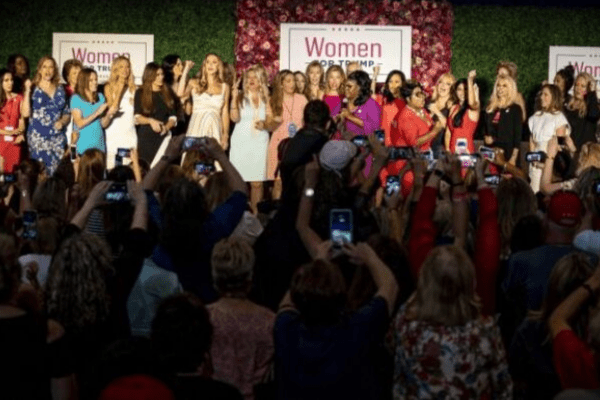
The Trump campaign has zeroed in on the area, with a message focused on the economy. Last month, the campaign launched its “Women for Trump” initiative at a casino in King of Prussia, a part of Montgomery County best known for its vast, high-end shopping mall.
Speaking at the event, Lara Trump, the president’s daughter-in-law who is married to son Eric, told attendees to ask their neighbours if they had more money and were paying less in taxes since Mr Trump was elected, before answering her own question: “The reality is that for a vast majority of Americans, the answer is yes.”
The message is likely to be repeated nonstop between now and next year’s election, with the Trump campaign betting that suburban women will be more concerned about the economy than with the president’s divisive rhetoric or his hardline views on issues such as immigration and gun control — despite opinion polls showing the president is particularly unpopular among such voters.
Democratic pollster Jefrey Pollock said the president had “done his best to offend suburban women in particular on a regular basis”.
“A normal president who has had the economic growth that Donald Trump has been able to enjoy should be able to sit there with a job approval higher than what he has,” Mr Pollock said, adding that the president’s low approval numbers were “because he can’t shut up”. According to an average of polls compiled by the website Real Clear Politics, 43 per cent of US voters approve of the job Mr Trump is doing, while 53 per cent disapprove.
Elizabeth Preate Havey said her biggest challenge as chairwoman of the Montgomery County Republican Committee was appealing to voters who might have considered voting Republican in the past, but now reject the president.
“They just don’t like him, period,” she said. “And when you try to talk about policy, it reverts to his tweets . . . they are not thinking about their pocketbook, they are not thinking about what is in their best interest financially.”
Ms Preate Havey nevertheless said she had not met a “single person” who had voted for Mr Trump in 2016 and was not planning to back him again in 2020 — especially if the Democrats nominated a more progressive candidate such as Bernie Sanders or Elizabeth Warren.
One recent college graduate who had been involved in local campaigns described the president’s tweets as “horrible” and “distracting”, but said he was “doing a good job with the economy” and would vote for him again next year.
The graduate, who asked to remain anonymous, said most of her friends were Democrats, adding: “People aren’t so forthcoming with saying they are Republicans any more because they are afraid of the backlash that they will get because of the president.”
Dasha Pruett, an administrative assistant at Mass Mutual, the insurance company, who helps run a pro-Trump Facebook group that is only visible to group members and those invited to join, said the president would be re-elected thanks to a “huge silent majority”.
“There are a lot more people who support him,” she said. “They just don’t want to be vocal because they are afraid of being attacked.”
But Democrats are confident that women will reject both the president’s rhetoric and his actions at the ballot box in November next year.
Patrick Murphy, a former congressman who now runs Kennedy Democrats, a political action committee targeting the suburbs of Pennsylvania, said: “A lot of women . . . do not like how the president talks about other people” and have “grimaced when they have seen what has come out of the White House”.
“When we have had seven kids locked in cages die in our custody on the border . . .[voters] understand that American values are at stake,” he said.