The frequent near misses of air crashes in recent times are raising concerns among air passengers and stakeholders over the state of safety of Nigeria’s aviation sector.
These concerns are coming on the heels of two emergency landings in one day by two major domestic airlines, Air Peace and Medview, after realising faults on the aircraft.
Coming at a time when air passenger traffic is on the increase, experts fear that routine checks may be compromised in a bid to meet demand for air travel. This is as the surge in demand for flights is keeping planes in the air longer than they used to.
BusinessDay’s checks show that the bad shape of inter-state roads and recurring insecurity along frequently travelled routes across the country are forcing Nigerians who can afford a plane ticket to rather travel by air.

Figures on passenger traffic sent to BusinessDay by the Federal Airports Authority of Nigeria (FAAN) show passenger traffic increased by 19.4 percent to 16,371,674 in 2018, from 13,706,345 in 2017.
Also, passenger traffic rose by 16.21 percent to 13,762 in domestic airports in Lagos, Abuja, Port Harcourt, Kano and Enugu in the first quarter of 2019, from 11,842 passengers in first quarter 2018.
John Ojikutu, aviation security consultant and secretary general of the Aviation Safety Round Table Initiative (ASRTI), expressed worry that the Nigerian Civil Aviation Authority (NCAA) may not be thorough in carrying out safety audits on the airlines, which is impacting the operations of domestic airlines.
The first half of 2019 has seen many reported and unreported serious cases of incidents and accidents.
A document sent to BusinessDay by Accident Investigation Bureau(AIB), a body responsible for investigation of air accidents, showed that between 2018 and 2019, there were 24 reported cases of accidents and serious incidents.

Out of this figure, 13 cases were reported in 2018 while there are already 11 reported cases in just first half of 2019.
On Tuesday, July 23, a Boeing 737 with the registration marks 5N-BQO, operated by Air Peace Limited, made an emergency landing at the Murtala Muhammed International Airport after its nosewheel failed. According to a statement by AIB, from the information provided, the aircraft’s nosewheel collapsed on landing on the runway (18R) and gear tyre cut off.
Also, a Boeing 737-500 aircraft operated by Medview Airline on the same day made an emergency landing deploying oxygen masks mid-air. AIB said the airline had a serious incident while airborne which caused the crew to deploy oxygen masks and embark on emergency descent procedure.
Three weeks ago, Air Peace Boeing 737-500 aircraft skidded off the Port Harcourt International Airport runway upon landing due to poor weather and flooding on the airport’s runway.
In February, a chopper operated by Caverton Helicopter with Vice President Yemi Osinbajo on board crash-landed at Kabba, Kogi State, over failure of the operator to conduct site survey of the landing field prior to the flight and failure to carry out safety and risk assessment.
Experts say airlines are bound to experience operational issues but when it becomes frequent, it calls for concerned authorities to step up checks on the airlines and their airplanes.
Tayo Ojuri, chief executive officer, Aglow Limited, an aviation support services company, told BusinessDay that it is a matter of NCAA re-evaluating the safety standards in terms of safety management systems, operational and maintenance systems.
Ojuri explained that taking cognisance of the fact that this is rainy season, it is mandatory that factors such as weather issues, navigational aids and airport infrastructure are addressed.
“It is not just one thing that affects safety; it is a function of various other factors. From the airline perspective, we have to look at the operational, safety and IATA Operational Safety Audit (IOSA) standards. From the airport perspective, we need to know if the runway is safe especially in rainy season,” Ojuri said.
“Do we have adequate infrastructure to cope with all these challenges? We need to evaluate these issues for operations to be seamless. No operation is perfect but safety standards need to be measured and re-evaluated because they are dynamic and human lives are involved,” he said.
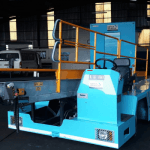
Mishaps between 2018 and 2019 include runway excursion, contained engine failure, smoke-in-the-cabin, ground collision with baggage conveyor, in-flight total loss of electrical power, ground collision during fuelling, engine failure, depressurisation, attending to land when number one symbol generator went off, crashed on landing, force landing, landing with gears up, hard landing and collapsed nosewheel on landing, according to the AIB document.
These incidents involved Olam Nigeria Limited, Nest Oil, Delta Air, Arik, Air Peace, Dana, Skybird Aviation Limited, Emirates, Nigerian Police Force, Azman, Aero Contractor, IAC Ilorin, Dornier, Caverton Helicopters Limited, NCAT and Medview, the document said.
“Anywhere in the world these things happen. They are part of the operational challenges. So, we need to evaluate those safety challenges within the spectrum of safety management system and safety standards of the airline to ensure that maintenance are done and the evaluation is proper and in accordance with IATA regulations,” he explained.
IFEOMA OKEKE