Investors in the Nigeria Global X MSCI fund, an equity mutual fund managed by Morgan Stanley Capital International, have seen the value of their investments eroded significantly over the last seven years.
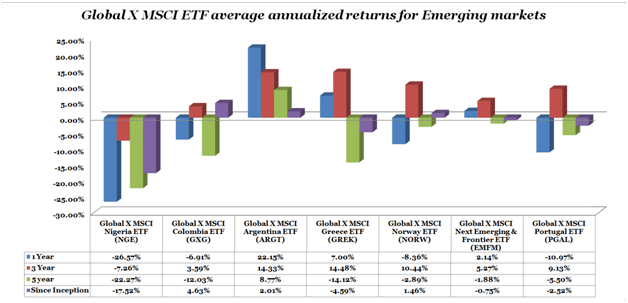
The fund which had a market value of $108.763 million at inception in 2013, plunged over the period by 69.97 percent cumulatively to $32.671 million at the close of trading on Tuesday. This puts the loss in the value of the fund to the tune of $76.102 million since 2013 when the fund was created.
Also, the Net Asset Value (NAV), which measures the value of its assets less liabilities, also fell by the same margin to $13.54, from $45.09, according to BusinessDay analysis.
Asset holdings underlying this fund include Dangote Cement, GTB, Nestle Nigeria, Access Bank, Zenith Bank, Nigerian Breweries, Stanbic IBTC, UBA, Ecobank and First Bank, to mention the top 10 based on market value in dollar terms.

Compared to similar funds in other emerging markets, investors had seen over the years, appreciation in their asset value in countries like Colombia (+60.05%), Argentina (+17.98%), and Norway (+13.34%).
These funds stood as the best performers amongst 6 major Global X MSCI funds, outperforming the Global X MSCI Next Emerging & Frontier ETF (EMFM) which was down -4.16 percent in Net Asset Value (NAV) during the period.
The Global X MSCI funds provide investors a broad exposure to frontier and next-emerging markets, while excluding the more developed emerging markets of Brazil, Russia, India, and China (BRICs), as well as South Korea and Taiwan.
Grossly under performing the broad-based exposure fund were Greece and Portugal with NAV eroded by -29.93 and -13.41 percent, respectively. However Nigeria stood as the worst performer amongst all.
“The factor largely responsible for this is the huge devaluation of the Naira against the dollar since 2013,” Paul Uzum, a Lagos-based stockbroker told BusinessDay.

“This gives us an idea of how foreign investors in the Nigerian equity market are faring. A lot have lost significant value for their holdings. However the good thing is that most have diversified portfolios in other emerging markets which had limited the effect of their losses,” Uzum explained further.
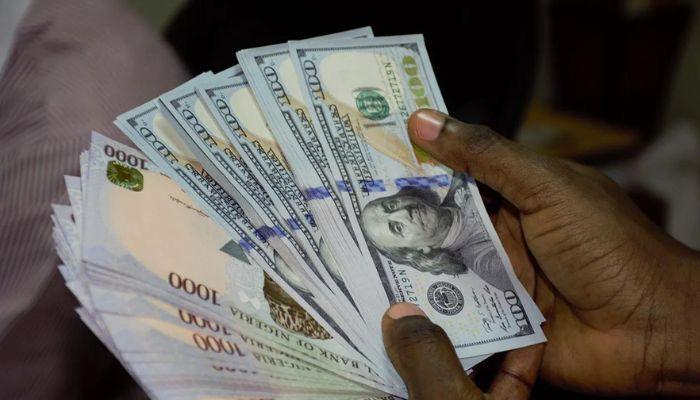
During the period under review, the value of the naira against the dollar fell by about 49 percent, as official exchange rate moved from N157.3/$1 in 2013 to N306/$1 in 2019.
The upward pressure witnessed in Nigeria’s consumer price index (CPI) has reduced the real worth of foreign investors in the Nigeria global X fund dip by 69.47% when adjusted for inflation to N3.55 billion from N11.63 billion in 2013.
While in Q1 2019, Nigeria experienced a reduced appetite for its risky assets by foreign investors, evident in the capital importation data released by the National Bureau of Statistics (NBS), concerns remain that the country should expect further dampening in foreign exposure to the equity market.
For every corresponding Q1 period in the last six years, while capital inflow into money market instruments accelerated by an average of 116 percent year-on-year, and by 3 percent in the bond market, investment in Nigeria’s equity market decelerated by 22 percent, BusinessDay analysis shows.
While the prospect that the US Fed will cut rates which analysts expect to spur appetite of foreign portfolio investors for risky assets in the emerging markets, the Nigerian equity market may not benefit from possible inflows of capital into the economy.
This is on the back of a perceived heightened risk position of the Nigerian economy by foreign investors as the economy is largely susceptible to global and domestic shocks, hence a sustained trend in money market instruments.
“Since the global financial crises, the market is yet to hit the highs recorded during that period, coupled with the devaluation of the currency which have seen returns on companies represented on the fund lose value in dollar terms,” Gbolahan Ologunro, research analyst at CSL stockbrokers.
Current market rout which has led the Nigerian All Share Index (NASI) to a year-to-date performance of -10.3 percent as at Tuesday shows the perceived precarious state of the Nigerian economy and low confidence from investors.
DAVID IBIDAPO