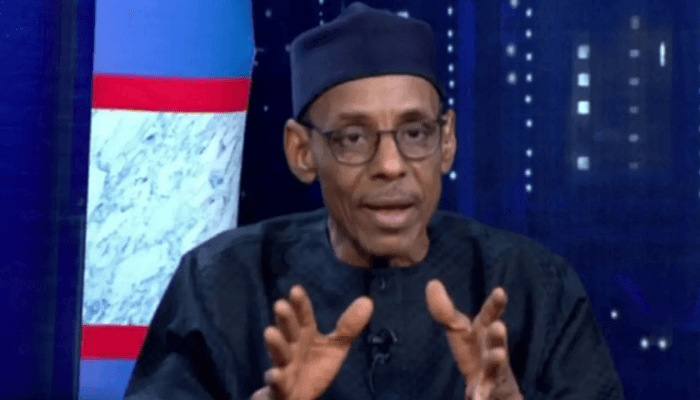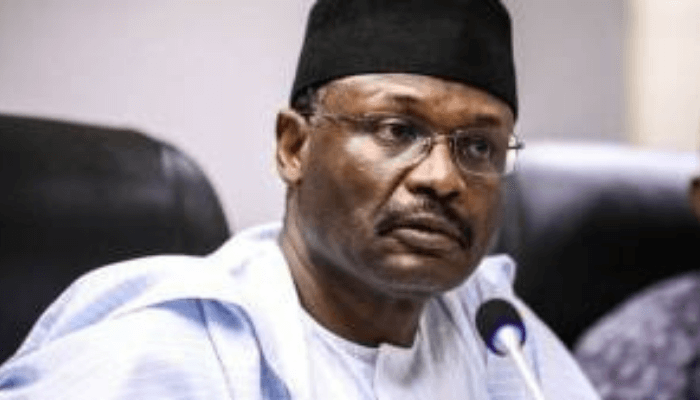
The director, Centre for International Advanced and Professional Studies, Anthony Kila (professor) has called for a radical overhaul of the Independent National Electoral Commission (INEC), following the controversies that ensued after the one- week postponement of the February 16 presidential election over logistical challenges.
Kila’s views tally with that of Obafemi Hamzat, deputy governorship candidate of the All Progressives (APC) in Lagos, who believes that INEC as presently constituted breeds inefficiency and wastage and therefore required unbundling.
Hamzat, who spoke with BusinessDay, said the election umpire should be decentralised along the six geopolitical zones, with each of the zones allowed to print election materials but with supervision from the headquarters in Abuja. This, he believed would eliminate the recurring incident of election materials not reaching the electorate in their far flung localities on schedule time.
Speaking at the 2019 Presidential Elections Predictions: A Post Mortem, held by the Association of Political Consultants Africa, in Lagos, on Sunday, Kila said enormous resources being spent INEC do not reflect on efficient conduct of elections in Nigeria.

According to Kila, it is currently too expensive to manage INEC because of the mistrust between the commission and electorates. “At the moment one thing that should be said about INEC is that we are paying a price for not being transparent; the lack of trust is costing us a lot that is why INEC is too expensive to manage.
“INEC of today is analogue, slow, confused, not certain, and not transparent. It does not reflect the society of today; this INEC needs a total change,” he said.
Kila, who opined that every election is a test for political parties, candidates, the umpire (INEC), and for analysts, stated that the INEC of the future would decentralise authority, responsibility, and digitalise process.
“There is no reason why we should be seating and counting votes for 48/72 hours before we get results. There are ways to handle the whole election of Nigeria like one big master sheet of Excel Sheet, in which wherever you vote from, we can get the results live in real time and it will go to a visible website for example, and more media stations can transmit it just as they are coming in right away.

“We need to outsource a lot of things that INEC is doing; I have proposed and will continue to stand by the proposal that INEC should work with banks – people should be able to collect their PVC in their banks,” said Kila stating that the process of registering for vote and collecting the Permanent Voters’ Card (PVC) is out dated.
Kehinde Bamigbetan, the president, Association of Political Consultants Africa said the 2019 elections showed that plan and strategy can work based on the analysis that influenced the predictions made before the elections. “Political management is part of behavioural sciences: it is said and believed that as far as human beings are the ones who vote and participate in politics, political predictions about how people are likely to behave during an election will be largely based on scientific principles,” he said.
According to Bamigbetan, the group work to promote, sustain and foster the democratic process as a matter of principle and practice, hence providing a forum for the exchange of ideas and views on principles and techniques of politics, political campaigning and government relations.
Membership of the body is drawn from professional political consultants who counsel, run campaigns or provide specialised services such as polling, fundraising, message development and communications for candidates, political parties, public institutions and actors in the democratic process.
JOSHUA BASSEY & JOHN SALAU