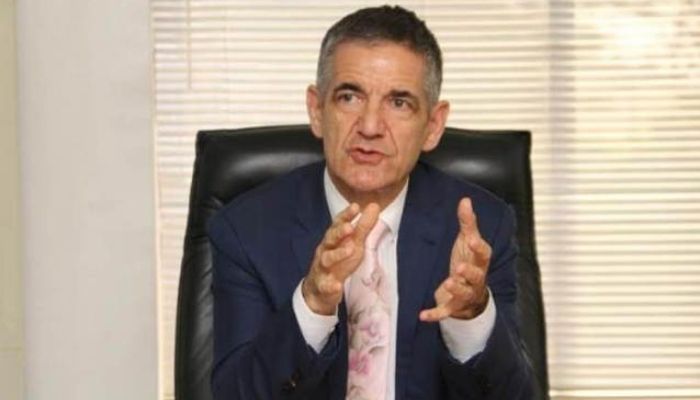
As part of plans to strengthen and deepen its foothold in Nigeria, Lafarge Africa, a member of LafargeHolcim, the global leader in building materials and solutions, says it has evolved strategies that will further develop its desire to be at the forefront of sustainable construction solutions and innovation. At the centre of these strategies is its plan to offer rights issue which includes raising N90 billion and restructuring its outstanding short term $315 million shareholder loans. In this interview, MICHEL PUCHERCOS, the company’s CEO, offers insights on these ambitious plans.
Your major plan now is to raise N89.2 billion in 2019 through a Rights Issue. What are the immediate and long-term benefits of this move, coming on the heels of your N131.7 billion Rights Issue concluded in Q1 2018?
Last March, Lafarge Africa successfully raised N131.7 billion by way of Rights Issue, which is the largest Rights Issue by size raised in Nigeria so far. In order to further deleverage the balance sheet, our shareholders at an Extraordinary General Meeting on September 25, 2018 approved a resolution to raise additional capital by way of a Rights Issue of 90billion.
READ ALSO: Nigeria’s largest cement makers see profits jump to 7-year high despite Covid-19

The successful conclusion of the Rights Issue will help to strengthen profitability and put the company in readiness for all its planned capacity expansion in Nigeria. The company foresees a stable pricing environment and favourable economic conditions in its Nigeria market while its South African operations are undergoing a turnaround plan that has begun to yield results.
What will you consider the mid to long-term prospects of the building industry and the value of Lafarge solutions to the players in the industry?
LafargeHolcim’s new Strategy 2022 – Building for Growth – aims to drive profitable growth and simplify the business to deliver resilient returns and attractive value to stakeholders. In full view of the trends in our industry and marketplace, we have developed a strategy that plays to our unique strengths as a company and will shift gears towards growth of the top and bottom line over the next five years.
The ‘Building for Growth’ Strategy has four pillars including Growth, Simplification & Performance, Financial Strength and Vision & People. At Lafarge Africa, we have clearly outlined targets under each pillar that will ensure we deliver the promised growth to stakeholders.
We will drive Growth by executing more aggressive strategies for Aggregates and Ready-mix Concrete alongside our existing strong cement business. The value driver Simplification & Performance will create a cost disciplined operating model and a corporate-light structure. Financial Strength will ensure disciplined value creation through maintaining an investment grade credit rating. The value driver Vision & People further develops the values of trust and integrity, the commitment to Health & Safety and the desire to be at the forefront of sustainable construction solutions and innovation.

How does Lafarge plan to achieve profitability given the challenging business environment?
Interestingly, there has been a rise in demand for cement in Nigeria since the start of 2018. In order to benefit from this emerging resurgence in demand for cement we are working at increasing local sourcing of critical materials to lower the foreign exchange component of our operational costs. We have also commenced the roll out of a new route to market initiative which has begun to positively impact our logistics operations.
Expectations of a strong market, favourable pricing in Nigeria coupled with gains from logistic and commercial initiatives will sustain market share going forward and also ensure the growth of our business. Lafarge Africa’s turnaround plan in South Africa, focused on cost containment, commercial transformation and industrial stabilization, is expected to restore profitability.
We are aware that there was a plan to increase the installed capacity of the Ashaka cement plant. Is that plan still in place?
The plan to expand the installed production capacity of Ashaka cement plant is still alive and the Scheme of Arrangement which was approved by the shareholders last year is another step towards the realization of this plan. This expansion in capacity is focused on supporting our growth ambitions by meeting increased market demand and servicing our customers better with high-quality products. However, pending when all preparatory steps are concluded for the additional production line, work to debottle-neck the existing plant to increase its production capacity by 200,000 metric tonnes per annum has commenced.
It is also important for our shareholders and investors to note that the expansion of the cement production capacity of the Mfamosing plant in Calabar to 5.8 million metric tons per annum has contributed significantly to Lafarge Africa’s capacity expansion and footprint in Nigeria.
How has the use of alternative fuels to support energy requirements of your operations in Ewekoro impacted your business and how do you hope to consolidate on this at other plants?
Lafarge is pioneering the use of alternative fuels in cement production in Nigeria. This deliberate effort at energy optimization helps us decrease our dependency on gas and at the same time reduce the CO2 impact of our operations.
An increase in the use of alternative fuels can help reduce disruptions to production due to natural gas supply issues and is also beneficial to the environment.
What we are doing is unique in Nigeria and we recently emerged the Best Company in Clean and Affordable Energy in the2018 Sustainability Enterprise and Responsibility Awards (SERAS)CSR Africa Awards in recognition of our efforts.
What are some of the plans you have in place for Lafarge Africa going forward?
Looking forward, the company sees domestic consumption of cement being buoyed by government’s infrastructure spending. Working with our dedicated research centre in Lyon, we have expanded our product range to include premium technical cement for large scale constructions such as roads and bridges as well as specially formulated cement that satisfies the needs of block makers in terms of usefulness for everyday building projects.
In Nigeria, we are committed to delivering sustainable strong performance, with the aim of improving operating EBITDA margin. And for the South African operations, we are looking to deliver on cost optimization and commercial excellence initiatives to sustain performance in 2019 and beyond.
Chuka Uroko