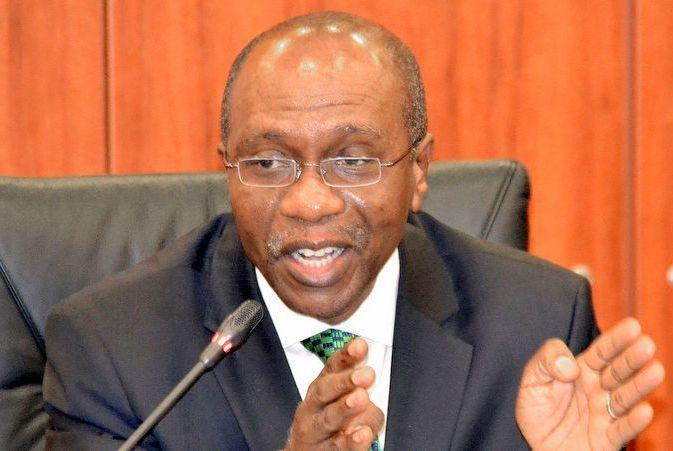
Late last year at the Bankers Committee retreat in Lagos, Godwin Emefiele, governor of the Central Bank of Nigeria (CBN) cried out over outrageous interest rates charge by microfinance banks operating in the country.
Microfinance banks are charging about 48 percent per annum as interest rate on loans extended to low income earners, while deposit money banks (DMBs) are charging over 31 percent.
Operators and other stakeholders admitted that microfinance banks are charging higher than commercial banks but not outrageous rates.
Giving the reason for the high interest rate, Rogers Nwoke, National President, National Association of Microfinance Banks (NAMB) explained that it is failure of the CBN to disburse planned intervention funds to MFBs.

“The National Microfinance Policy provides for the “establishment of a Microfinance Development Fund to provide liquidity to the Microfinance segment of the economy. This fund is still not in place since the launch of the policy in 2005”, he said.
The CBN on August 2013 established the “Micro, Small and Medium Enterprises Development Fund’ (MSMEDF) to provide for the wholesale funding requirements of MFBs and Microfinance Institutions (MFIs).
Nwoke said another reason was the failure of the CBN to implement the linkage programme as stipulated by the National Microfinance Policy.
However, the CBN’s 2018 half year report revealed that the total sum disbursed, from inception in 2013 to date, was N81.64 billion, with N56.61 billion (69.3%) to state governments, while the MSMEs collectively accessed N25.03 billion (44.2%). The sum of N4.04 billion was repaid in the review period, bringing the cumulative repayment to N17.42 billion, since inception, to the end of June 2018.
“Today commercial banks can collect deposits from the smallest saver but cannot give loans. A system where commercial banks can collect savings and not give loans to poor people will continue to aggravate the situation. Commercial Banks must be mandated to lend a percentage of their loans to MFBs for on-lending to micro clients”, Nwoke told BusinessDay.

“The impact of inflation, currency devaluation, very high operating cost, and multiple taxation, among others is high and outrageous”, he added.
Looking at microfinance banks in 2019, Johnson Chukwu, managing director/CEO, Cowry Asset Management Limit said the sub-sector will continue to be under pressure because of low customer confidence and increases in Non-Performing Loans (NPLs).
According to the CBN’s report, net loans and advances of microfinance banks fell to N175.20 billion at the end of June 2018, from N193.16 billion at the end of December 2017 and N193.20 billion at the end of June 2017.
Emefiele said the CBN has through its MSME fund disbursed over N100 billion to the MSME sector, but still feel a lot can be done.
The CBN recognizes that the greatest challenge confronting the MSMES and local farmers is access to credit, and that to unlock the growth potentials in the country; these groups must access funding seamlessly. “In response to this challenge, the CBN will in due course take action that will directly bring banking services to the rural communities through licensing of a national Micro Finance Bank to be located in all local governments in Nigeria, through which credit can be channelled to our rural communities”, Emefiele added.
Hope Moses-Ashike