More than one month after receiving the report of the National Minimum Wage Committee, the Presidency is yet to transmit an executive bill to the National Assembly as procedure demand or name the high-powered technical committee President Muhammadu Buhari promised to look into the N30,000 recommended by the Ama Pepple-led committee.
This is also as the ultimatum issued by organised labour to the Federal Government to transmit the report of the national minimum wage committee to the National Assembly expired on December 31, 2018, thus setting the stage for a nationwide strike that could cause severe damage to the fragile economy early in the New Year.
Checks by BusinessDay as of Monday, December 31, 2018 confirmed no executive bill had been sent through the senior special adviser to the president on National Assembly matters (Senate and House of Representatives).
The leadership of the three labour centre- Nigeria Labour Congress (NLC); Trade Union Congress (TUC) and United Labour Congress (ULC), had rejected the president’s proposal to set up a technical committee to assess the ability of government to pay the N30,000 recommended by the Ama Pepple committee, insisting that the report be transmitted to the National Assembly on or before December 31, 2018.
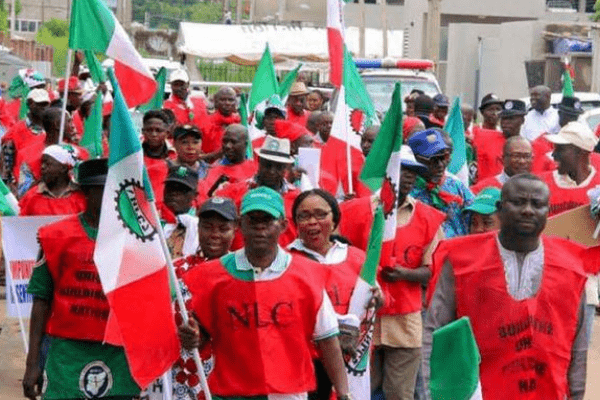
Labour had since commenced mobilisation of workers and their civil society allies for a nationwide strike from January 8, 2019 to press home their demand.
“We are reaching out to our allies in the civil societies. We are also discussing modalities to make the strike effective and impactful should the government failed to accede to our demand. Our demand clear; transmit the N30,000 recommended by the National Minimum Wage Committee to the National Assembly for action,” a member of the labour movement told BusinessDay.
Analysts observed that the industrial action if carried out may truncate ongoing preparation for the 2019 general elections which is expected to commence in February, 2019.

According to the timetable released by the Independent National Electoral Commission (INEC), the Presidential and National Assembly elections hold on Saturday, February 16, 2019 across the country. The Governorship, State Houses of Assembly and Federal Capital Territory Area Council elections hold on Saturday, March 2, 2019, respectively.
In line with the communiqué jointly issued by the three labour centres at a meeting held in Lagos state penultimate week, all affiliate unions in public and private sectors have affirmed readiness to join the nationwide strike.
Fortune Obi, public relations officer of Petroleum and Natural Gas Senior Staff Association of Nigeria (PENGASSAN), an affiliate of TUC, affirmed readiness to join the industrial action, urging the Federal Government to do the needful in order to avert another economic crisis.
Peter Ozo-Eson, the general secretary of NLC, said the position of the three labour centres remained sacrosanct.
Disturbed by the development, the Nigeria Employers’ Consultative Association (NECA) has warned on the negative implication of the proposed nationwide strike by the organised labour, saying that the Nigerian economy cannot absorb any further shocks from such action.
Timothy Olawale, director-general of NECA, said the economy was still struggling from the impact of the recent recession and urged the Federal Government to avert the proposed strike.
“It is worrisome that in a nation whose economy is still reeling under the effects of recent recession, government would needlessly further drag the economy into avoidable abyss. The colossal loss borne by businesses during the warning strike in September 2018 is yet to be recovered and further disruption of business activities might sound the death knell for many enterprises.
The DG further expressed worry at the indecisive disposition of the Federal Government towards concluding the process leading to the implementation of a new national minimum wage.
He said: “Globally, there is a recognised and acceptable process of setting a National Minimum Wage as enshrined in the ILO Convention 131. This process had been adopted in previous National Minimum Wage setting in Nigeria and was meticulously applied by the National Minimum Wage Committee inaugurated by the President in December 2017.
It was expected that following the submission of the National Minimum Wage Committee’s report to the President on Tuesday, November 6, 2018, expedited action would be taken in transmitting a bill to the National Assembly as promised by President Muhammadu Buhari.”
Explaining further why the strike should be averted, the NECA DG said that with the rate of unemployment as recently released by the National Bureau of Statistics (NBS), it is expected that all hands be on deck to ensure the continuous survival of businesses.

Proposing a way out of the threat by the labour union, he urged that “the President should, without delay, transmit an executive bill to the National Assembly as promised to enable it finalise the process leading to the enactment of a new National Minimum Wage Act.
He said businesses and the economy at large couldn’t afford another avoidable strike. He noted that the private sector, which is supposed to be the engine-room of national development, is usually the victim of such strikes.
The DG of NECA concluded that, “businesses are presently encumbered by several challenges and any avoidable Labour action at the beginning of the year or any time whatsoever would be counter-productive, disruptive and would not be welcomed”