The historic point of no return, which is the beginning of the journey to unknown destination, is located in Gberefun village in Badagry, Lagos west senatorial district. That was the spot where our forefathers who were sold into slavery had the opportunity to look at the Nigerian shores for the last time.
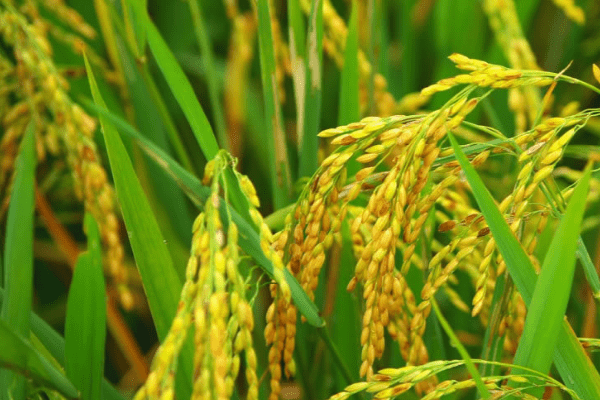
Another history is to be made in the same village, albeit, a good one. Rice farmers who are being coordinated by, Segun Atho, the deputy national president, Rice Farmers Association of Nigeria (RIFAN) have resolved to turn the 5,000-hectares landmass into the most productive centre in rice production in Lagos State.
Apart from being a historic area, the choice of the location of the rice farm was informed by the availability of land and the presence of environmental conditions that support maximum rice yield.
“This place possesses all the environmental factors that support maximum rice yield. Other areas in Lagos where such climatic conditions are present are in Ikorodu and Epe. The three locations, Badagry, Epe and Ikorodu have similar soils as the ones found in South-South Nigeria. They support the production of upland and lowland rice”, Segun Atho said.
He continued, “Rice needs water. You crossed over the lagoon to get to this farm and after this place is the ocean, which is historically the point of no return during the slave trade. We have sufficient rainfall, and you only need to dig the soil for some few meters to get enough water to irrigate your farmland”, Atho added.
One of the major hindrances to farming in Nigeria is the availability of land as we are naturally attached to our lands. But two chieftains in Gberefun Village are out to make the difference as they are the ones that allowed the farmers to cultivate the 5,000 hectares of land for rice production.
Tajudeen Fowler, the Otun Baale(next to Baale) of Gberefun Village is one of the important personalities that permitted the use of his land for the project. He also joined our team while inspecting the large expanse of the farmland that is presently undergoing preparation. Moji Onilude, MD/CEO of Onilude Agricultural Estate, is another personality in the community that allowed his land to be used also for the project.
“Our people are enthusiastic about the project and it was their enthusiasm that prompted them to release their lands to us for farming”, Atho said.
Why rice?
Rice has become a staple food that is consumed in almost every household across the world. It is second to corn as the most consumed cereal across the globe. In 2017, China produced 210 million tons to emerge as the world’s biggest paddy rice producer, accounting for 30 percent of the 700 million tons produced by all the countries in the world in that year. Other major producers are India, Thailand, Vietnam, Pakistan, United States and Brazil.

In Africa, particularly Sub Saharan Africa, consumption has grown more than production in the last few years, even as the West African sub-region is estimated to account for over 40 percent of rice production in Africa.
Furthermore, Nigerians consume about 6.5 million tons of rice annually. With local production not growing at the pace of consumption, half of this figure is augmented through importation and that costs the nation about $2 billion (N702bn) to import rice annually.
As Nigeria’s primate city and the biggest state economy, it is said that about 60 percent of the farm produce in the nation is consumed in Lagos State. In 2010, the National Bureau of Statistics (NBS) estimated that N1.398 trillion was expended on the consumption of rice in the country, and N105 billion was spent on rice consumption in Lagos State alone. BusinessDay Research and Intelligence Unit (BRIU) estimates that the nation’s current rice expenditure is N2.56 trillion, meaning that it has grown by 83 percent during the period.
How did BRIU arrive at N2.56 trillion as the national rice consumption expenditure?
Our estimate is based on the assumptions that out of the 180 million Nigerians, only 40 percent or 72 million Nigerians eat rice daily. Also, an average consumer of rice expends N100 ($0.28) daily on rice. For the 365 days in a year, the total national expenditure on rice will be N2.56 trillion or $7.12 billion at an exchange rate of N360 to a United States dollar. Also, we adopted a modest 40 percent as the portion of the total rice available in the country which is consumed in Lagos State alone. That gave N1.03 trillion or $2.84 billion as the value of rice consumed in Lagos. The population of the commercial centre of the country is estimated at 20 million inhabitants and grows at about 2.8 percent per annum.
“If we assume that an average consumer of rice spends N100 each daily, the rice industry in Nigeria is very huge”, Atho said. And based on our estimates, truly it is.
Another source of inspiration for the project is the amount of opportunities in rice value chain that Nigerians are not aware of. It starts from rice gestation period which usually lasts for three months, implying that with good farm management, rice can be grown at least in three cycles in a year. In Lagos as it is in other southern states, the climatic conditions support the production both lowland and upland rice whereas in the northern parts of the country, most of the rice grown there is upland rice.
Our findings show that with good farm management and seeds, a hectare of rice farm could produce between 4.5 to 5.5 tons. When calculated in terms of 50 kg bag, a hectare of rice farm will generate between 80 and 120 bags(50 kg) within three months.
We are aware that a 50 kg bag of LAKE rice goes for N12, 000 in the market, although there is subsidy on it by the Lagos State Government. Therefore, gross revenue from a hectare of rice farm ranges from N960,000 (80 bags) to N1,440,000(120 bags) within a cycle (Three months).
How much start-up capital is required?
Initial investment for rice farm varies between the northern and southern parts of the country. In the north, a rice farmer would require between N180, 000 and N220, 000 to cultivate a hectare of rice farm from land preparation to harvesting. In the south, an investor will require between N250, 000 and N350, 000 to cultivate a hectare of rice farm from land preparation to harvesting.

When we assume that a farmer spends the maximum of N350,000 on a hectare of rice farm from land preparation to harvesting, and the same farmer realises the least revenue of N960,000, this leaves a net profit of N610,000 in three months, translating to about N203,000 monthly.
Private-Private Partnership
To enhance land preparation, RIFAN has entered into an agreement with John Deree, a leading global brand in the supply of tractors for agricultural businesses. Also, there is a standing off-taker agreement with the Rice Processors Association of Nigeria (RIPAN) whose members will buy directly from the farmers, meaning that a farmer doesn’t have to look for rice millers.
“The agreement we have in place is a private-private partnership (PPP). John Deree will supply us tractors, three of which are working on this farm now. Certified seed suppliers will bring in seeds. We may employ drones to spray the rice seeds during planting”, Atho said.
In a bid to reduce the unemployment situation in the country, the Central Bank of Nigeria (CBN) has invested a lot in the rice value chain through the Anchor Borrowers Program (ABP) and other related projects. It is now left for discerning Nigerians to key into the multi-billion dollars rice value chain in Nigeria.
BRIU Rice Industry Monitor
In recognition of the huge opportunities in the rice value chain, which, if well exploited, could reduce unemployment and poverty significantly, BusinessDay Research and Intelligence Unit (BRIU) will introduce BRIU Rice Industry Monitor in 2019. The monthly report will capture every notable progress in the nation’s rice value chain. Farmers, processors, millers, seeds suppliers, equipment sellers and distributors, research institutes, new investments, among others will be the focus of the report. We hereby seek partnership with notable players in the nation’s rice value chain to make the publication a success.