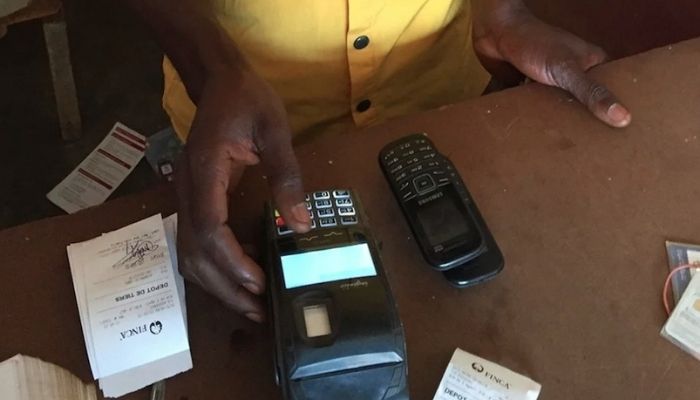
In the last 9 years, the largest economy in Africa Nigeria, has recorded significant progress in increasing financial inclusion in the country. However, major challenges which may inhibit the attainment of the nations vision 2020 of achieving 80 percent financial inclusion remain.
According data revealed in the 2018 state of the market report released on Thursday by Lagos Business School (LBS), statistics of banked people in the economy has doubled from 23.6 percent of total population recorded in 2008 to 48.6 percent in 2017.
Meanwhile under banked Nigerians have reduced significantly to 10.7 percent compared to 23.9 percent recorded in 2008. Also, unbanked Nigerians reduced to 40.8 percent of total population from 52.5 percent recorded in 2008.
According to report, Nigeria recorded progress in growing the banked and under-banked segments by 7.5 to 48.6 percent and 0.2 percent to 10.7 percent respectively whilst reducing the unbanked segment by 7.6 percent”.
READ ALSO: Why Nigeria is among seven biggest unbanked nations
However, the report revealed that banked adults are more likely males while under-banked and unbanked adults are more likely female owing that women are more disadvantaged to financial services.
According to the report, a higher proportion of women lack access to financial services (unbanked) while a higher proportion of men have access to formal financial services (banked).
In the gender disaggregation analyses, the number of females categorised as banked decreased by 0.2 percent to 17.2 percent from 17.4 percent in 2016, while increases in the under-banked and unbanked categories account for 0.1 and 2.2 percent respectively.
This trend is reversed amongst the males where the number of banked increased by 7.5 percent and declines of 5.4 among the unbanked, with the under-banked remaining static.
Also, report revealed higher penetration levels among the banked and under banked customer segments across most financial services products, with savings being the most accessible and insurance the least accessible.
“A possible explanation for this pattern is the 2016 recession and associated high levels of unemployment and under-employment,” says LBS report 2018.
Amongst other challenge which poses challenge to the attainment of about 80 percent financial inclusion target is low digital financial service awareness and utilization according to the report.
The LBS report explained that, “Despite increasing levels of awareness with the under-banked and unbanked, the conversion process to adoption and utility is not deriving significant results.
Thus, increased awareness of mobile money across the under-banked and unbanked segments and adoption-conversion processes are essential.”
BusinessDay analysis of the report shows that in 2017, 65.8 percent of the banked population are not aware of mobile money, 92.8 percent of the under banked are not aware of mobile money, while 94.7 percent of the unbanked are not aware of the mobile money financial service.

Despite significant growth in financial inclusion in the country, these major challenges still pose threat to the attainment of vision 2020, 80 percent financial inclusion goal.