I concluded my article on Nigeria and the sustainable development goals (SDGs) by identifying teachers as the major driver in the implementation and the achievement of the SDGs. Without teachers, no society can develop and achieve its potential.
I wrote a story on how Mrs Musa accidentally motivated John and change his life as a teacher in my book titled, the teachers’ fortress (subtitled, a simple guide to becoming an efficient teacher and school leader of impact). John was an unserious boy in Mrs Musa’s class. Dirty, always making noise in the class and had his homework undone. In the same class was another John, who is a good student to have for any teacher in the classroom. The second John was among the brilliant and well-behaved students, unlike the first John.
At one of the parent-teacher’s meetings, a woman approached Mrs Musa and asked, “How is my son, John doing in your class? Mrs Musa in her assumption feels this is the mother of the pleasant John and responded “I can do anything to have him in my class. He is such an excellent and brilliant boy.”
Unknown to Mrs Musa he was talking to the mother of the “terrible John” who told her boy the good comments made about him by his teacher. John could not sleep that night. The next day, he went straight to his class teacher and said to Mrs Musa. “I never believed any teacher would like me and want me in her class. My mum told me what you said about me. From today, I will change and be a good student to match your expectation of me.”
READ ALSO: Buhari approves special salary scale for teachers
That was how John behaviour was changed by Mrs Musa’s unintended motivational comments. A teacher affects eternity; he or she can never tell where his influence stops said, Henry Adams.
Teachers traditionally are the first and the best of all the professions because they produced others. It is important for teachers to go beyond teaching and do something that could change the success and growth trajectory of the students in their custody. I vividly remember a post that was widely circulated a few years ago. The former Governor of Lagos State, Babatunde Fashola invited and united with his teacher after 38years at the government house in Lagos. The teacher invited was not the only teacher Fashola passed through in his academic sojourn. Why could he never let her go unnoticed? We all have teachers who have, one way or the other, created memories in us.
For teachers to cause a change, going beyond being sages on the stage in their classrooms is the sine qua non. Teachers who will be remembered are those who can inspire their students to see beyond today and belief, they are better than they are or think at the moment.
Whenever I speak to teachers, I can’t but share the influence of Mrs A. B. Amodeni and Mr J. A. Oni on my life. They are more than the school principal and a teacher to me; they are counsellors that took ownership of the school environment and the students. They are not traders in the learning environment but are as stated in the book, the teacher’s fortress, teleprompters, energizers, activators, coaches, helpers, educators, role models and supporters of the students. They use emotional intelligence in influencing the students towards developing the cognitive intelligence of the learner.
Nigeria has and is in need of more teachers who are set to make an impact on the achievement of all the SDGs objectives, especially goal number four and five-quality education and gender equality. All the SDGs are hinged on the leadership capacity of those entrusted with the management of the nation’s resources. Coincidentally, teachers are the manufacturers of the leaders who will lead the society.
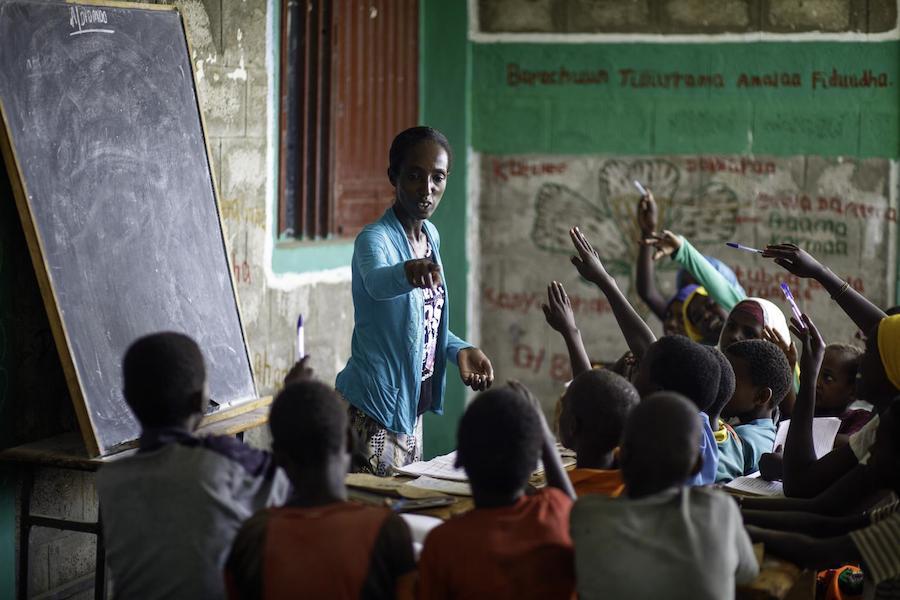
Two of the major areas for teachers as the drivers behind the wheel of the teaching success and national development are students’ motivation and leadership outside being competent to teach in line with the set learning outcome.
To motivate your students is to think like the owners of the students and take responsibility for their development within and outside the learning environment. Teachers who think like the owners of the students develop enduring relationships that empower the students with the right attitude and leadership skills to apply what is being taught in schools to life situations irrespective of location and the environment. They see teaching as a journey to developing the students’ six core skills of critical-thinking and problem solving, collaboration and communication, creativity and imagination, citizenship, digital literacy and student leadership and personal development necessary to thriving in the 21st century and beyond. No teacher can teach these skills unless they adapt to the new trends in the interest of their students. After all, you can’t give what you don’t have (nemo dat quod non habet).
In motivating the students, teachers are to act like life coaches, parents, mentors, emotion intelligence experts, advocates, collaborators and nation builders. No teacher without the ability top lay these roles either directly or indirectly will ever be remembered by the students. The leadership part is a corollary to the students’ motivation I just discussed. Students are better influenced by what they see others do. It is a game of what you say I cannot hear but what you do I can see and hear clearly. Teachers who influence their students beyond the learning environment are those who exude qualities the students are proud to emulate. If you ask your students to be punctual, the students want to see you on time.
These two bridges (students’ motivation and leadership) are necessary for teachers in order to cause a change within the learning environment that will impact the SDGs. These bridges ride on the platform of simple and clear communication to the students. No doubt, the teachers who are much more remembered by the students are those who put their foot in the print of sand through a motivational relationship with the students and exemplary value-based leadership in the learning environment.
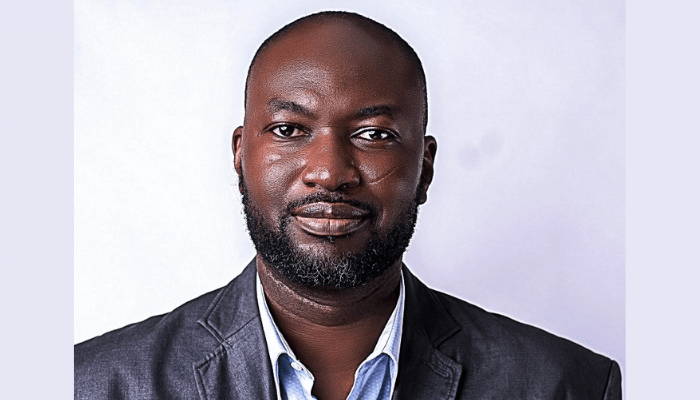
Babs Olugbemi, FCCA the Chief Responsibility Officer at Mentoras Leadership Limited and Founder, the Positive Growth Africa