In recent times, the Nigerian financial space has become inundated with the consciousness of the need for ‘financial inclusion’. Although this article is not wholly about financial inclusion, financial inclusion as well as governance have come to feature as critical realities during the course of my research work on digital platforms.
Not long ago, I was involved in a data collection exercise while working on a project for IT for Change. IT for Change is a non-governmental organisation based in India with the aim of using digital technologies to positively influence and cater for issues relating to or affecting humanity. Taking part in the research project was an opportunity for me to learn more about “platformization” in Nigeria. The design or structure of the research concept necessitated that the research problem be investigated using both quantitative and qualitative research methods. As part of the qualitative research approach, I actively participated in the conduct of interviews and focus group sessions. The heart of the research project being inclusion and governance in platforms operating in Nigeria, the research probes/questions were solidly grounded on the two pillars of inclusion and governance. My focus was on Diamond Y’ello Account (DYA) (a bank-led mobile money payments service that is operated jointly by a bank, Diamond Bank, and a mobile network operator, MTN) vis-a-vis other Nigerian mobile money platforms.
When DYA was first introduced, it was the first of its kind before the emergence of other bank-led products and it currently has the highest number of users amongst its Nigerian competitors. One fundamental issue that arose during the decision to adopt DYA in the research was whether DYA can be classified as a platform or a digital platform? There were some people who had the view that the mobile payment service is a platform, while another set of people were opposed to the idea of DYA being categorized as a platform. Another group believed that DYA was a platform, but not a digital platform. Thus, the following questions then arose; What is a platform? What is a digital platform? Can DYA be classified as a digital platform? The meaning of the word ‘platform’ varies depending on the context in which it is being used. For purposes of our research, platforms are anything you can build upon. If it is accepted that platforms are not just software products, then DYA which is a bank-led service (with several products) that uses USSD (Unstructured Supplementary Service Data) can be categorised as a platform. DYA can also be categorized as a mobile digital platform that facilitates financial services exchange or transactions between two or more inter-dependent groups.
In line with the CBN’s FSS-2020, the essence of the innovation of DYA, and other mobile payments services like Glo’sXchange, Gtb’s 737, First Bank’s 894 (Firstmonie) and so on, is to reach out to the unbanked in the society. Particularly, the products targeted vulnerable persons like the aged, physically challenged, low income earners, uneducated and persons that do not have access to banks by virtue of physical distance barriers. Although the target persons were the unbanked, the banked are also part of the USSD mobile money payments system because of the convenience and ease of doing banking transactions provided by the mobile money platform.
However, the multiplicity of USSD channels has raised issues of concern in terms of risks and threats without uniform standard for all. The CBN released a regulatory framework for USSD for financial services on April 17, 2018 to take effect on June 1, 2018. The aim is to ‘enhance the security of electronic payments system in Nigeria’. It is laudable that the CBN released this regulatory framework which tried to address some of the vulnerabilities, risks and threats which my interviewees complained about during the interview sessions.
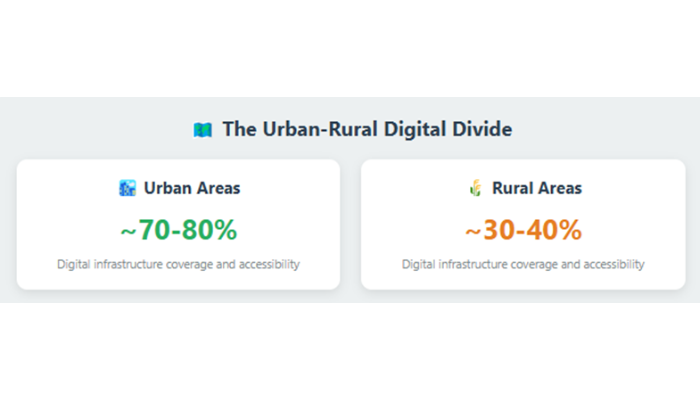
For instance, some individuals are worried about security. In extreme cases, theDYA agent caged himself in his kiosk with iron protectors in a bid to secure himself against burglars. Anagent who was, however, unfortunate to have been burgled about three times, pleaded that security operatives should consider their plight and be more concerted when handling cases of mobile money agents. In some cases, agents were frustrated out of using the mobile money USSD channel because of network issues of the USSD communication protocol and were interested in mobile network operators and stakeholders in the telecoms sector improving their infrastructure. Some other users complained about the dispute or complaint resolution system saying that their complaints were not handled properly. For example, one of the users transferred money for a client and the said money was not received. After several complaints and reporting, the transfer was neither received by the beneficiary nor was it reversed to the agent. The operators of the USSD channel blamed it on network issues. Another user complained that the USSD communication protocol did not generate receipts or notifications which can be used as evidence to show transfers or payments made. Yet another user complained that awareness of the mobile money platforms was limited to the cities and mainly conducted in English language and wanted the awareness to spread more to the rural areas, especially to women. A major drawback to the USSD mobile money system and other digital platforms is the poor quality of education given to users in respect of their rights and obligations regarding data protection and user privacy when using the USSD channels and other forms of digital platforms to carry out financial services. Some people are still suspicious of the efficiency of the USSD communication protocol and prefer going to the banks or an ATM to make transfers or carry out financial transactions. There is a huge trust issue regarding the mobile money platforms and its susceptibility to hacking or fraud. Even though the USSD platforms seem simplified to encourage self-service or in other words, permit a situation of ‘do it yourself’, most of the persons interviewed abandoned the USSD communication protocols at the least encounter with challenges while using the USSD channels. It would be an interesting outcome if mobile network operators(MNOs)and financial institutions conductstatistics of current active users of their USSD mobile money channels and alsoconduct an analysis ofthe USSD active users in order to derive the number of the ‘truly unbanked’users of their USSD mobile money channels.
The business model angle also has its challenges. The mobile network operators want licenses to operate the USSD communication technologies independent of the financial institutions like the Safaricom’s M-Pesa in Kenya, while the financial institutions want to protect their core business of providing financial services from being over-taken by stakeholders like MNOs and also want a harmonization of the USSD codes. It is true that the volume of financial transactions has increased, likewise the number of bank accounts established via the USSD channels because of the wide coverage of telecommunication networks over bank coverage. Moreso, it is cost-effective and cheaper for banks to partner with MNOs to provide financial services than spend money to build brick and mortar banks. Thus, there is need for both the telecommunications and banking institutions to find an optimum balance that will favour Nigerians and the institutions. In a bid to achieve this balance, the NCC signed an MOU with the CBN on payment systems with the objective of driving financial inclusion and the cashless policy/operations, improving mobile money penetration and enhancing inclusive participation in the digital economy within the country. The CBN has also released a Draft on Nigerian Payment systems Risk and Information Security Management framework for review and comments by the public and stakeholders on or before May 31, 2018. It will be a great service to our nation if stakeholders and the ‘enlightened’ public make out time to thoroughly examine the 26-page draft and make inputs that will be beneficial to the Nigerian financial sector and digital economy.
ONYINYECHI AKAGHA

Legal Practitioner/Research Assistant
Christopher Kolade Center for Research in Leadership and Ethics (CKCRLE)
Lagos Business School (LBS)