Stakeholders in the aviation sector have called on the federal government to scrutinize contractor claims on the Lagos and Abuja new terminals which are yet to be completed.
The Lagos and Abuja new terminals, which are part of the $500 million loan pact signed by Nigeria and the Chinese EXIM bank for construction of four terminals were scheduled to commence operations last year but the terminals are still being delayed over technical and construction issues.
While Abuja terminal is said to be built in a wrong location, obstructing the control and fire towers which would require relocation, Lagos terminal is said to have an insufficient apron, to accommodate the anticipated fleet size, therefore it will require expansion.
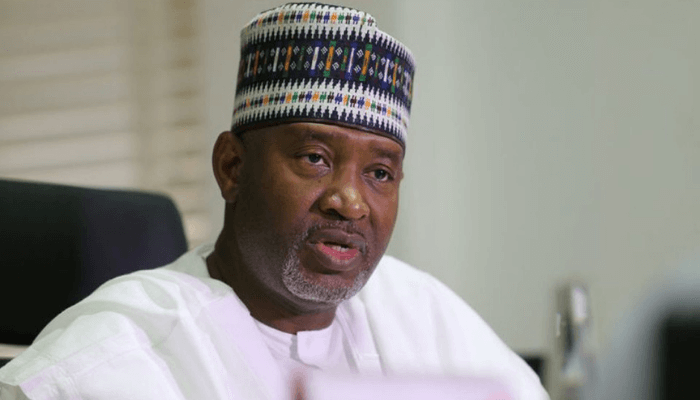
Hadi Sirika, Minister of State for Aviation while describing the scheme as a waste of fund, said the new terminal in Abuja alone would require additional N5billion to sort out the mess created by an error in location.

READ ALSO: Marriott announces new cluster general manager for three hotels in Nigeria
However, some engineers have called on the government to scrutinise the contractor claims, while other stakeholders have blamed the Nigeria Civil Aviation Authority for approving the building in the first place before construction work started.
Femi James an engineer with twitter handle @femolevsky in his twit said, “the New Terminal has “defects” is just plain callous. There was a plan, and that plan is being followed. The opportunity to build this terminal came and government took it. They deserve commendation. No money was released to Nigeria. Instead, we paid our counterpart funding requirement to secure the loan. Money did not “flow” to anybody. The construction has been done to standard. The connection to the old terminal can also be easily done. These were all client deliverables.
“My advice is for us to properly scrutinize contractor claims, for over invoicing and ensure we do not spend on what is not immediately required. Contractors always want more contracts.
“The New terminal construction, is being done within a very busy area, amidst a flurry of activities. This necessitates an Isolated construction system, where all utilities are isolated, until “Tie-in” in required.

Tie-in is usually done at the end of construction, it is usually in the last phase, after all structural and mechanical deliverables have been achieved and certified. A connection is made btw the new and existing utility systems,” James said.
According to him, “One way this is delivered is through the use of Utility ducts, underground. For Power, they are called ‘cableways’, Sewage – Sewer systems and water – pipe ducts. These areas are usually identified during pre-design/construction meetings.
“So as to ensure the orientation of the new edifice is as close as possible to existing Utility systems. If this is not possible, plans are made, on how to connect all systems. Again, this is a client deliverable.
“Now, is it possible for there to be “defects” in the building design itself? No. Tie-in protocols? No. But in adhering to utility preparation timelines, on Client side? Yes. We all know what transpired, post elections, circa handover notes.
Can a utility tie-in cost more than the cost of construction? Impossible. There is an existing sewage system and all that’s required is a tie-in. It can never cost more than $500,000 – $1m, at worst.”
He said that as is today, the New Terminal has already done it’s plane Apron markings on the tarmac, ready to receive planes into three slots. However, a current parking arrangement makes it tight to manoeuvre in and out.
He suggested that options available to the government will be to rearrange plane parking, utilize VIP apron and commute and expand Apron.
Another engineer who craved anonymity said if there are truly defects identified at the Lagos and Abuja terminals, it should not cost as much as N5billion and NCAA who approved that the terminals be constructed in the first place have questions to answer.
“In agreed contracts like these, deliverables by all parties are clearly spelt out. To this effect, there were specific options available: expanded on-grid, off-grid dedicated. This should cost between $2 to 3$, depending on the power requirements, which shouldn’t be above 10MW. This will distribute 11KV to transformers in each building for 400/220v distribution,” he added.
John Ojikutu, member of aviation industry think tank group, Aviation Round Table (ART) and chief executive of Centurion Securities, told BusinessDay that “In compliance with the national civil aviation regulations 2012 vol ll part 17.24.1 “aerodrome operation shall prior to the implementation of any renovation & expansion work on its aerodrome or the construction of additional aerodrome facilities at the same location, submit to the NCAA a revision of its measures designed to safeguard against acts of unlawful interference which may arise”.
“Was this done by the Federal Airports Authority of Nigeria (FAAN) or by NCAA? If these agencies had carefully conducted their survey, these identified defects would not have surfaced,”Ojikutu added.