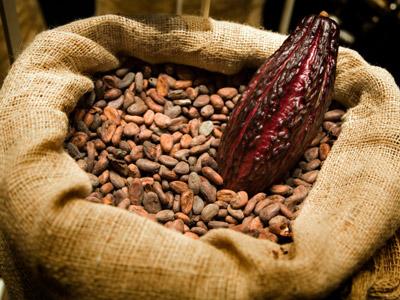
President Muhammadu Buhari’s regret, expressed recently on the neglect of the cocoa sector over the years is timely and a call to action. So is his resolve that his administration will work to re-position it and other non-oil export commodities. The statement was made at the FirstInternational Cocoa Summit organised by the Federal Ministry of Trade and Investment in collaboration with the Cocoa Association of Nigeria (CAN) which held in Abuja. The theme of the conference was: ‘Cocoa, a strategic Commodity for National Economic Development’,
As rightly noted by the President, who was represented by Chief Audu Ogbeh, the Minister of Agriculture and Rural Development, the country’s annual production of cocoa declined from 420,000 tonnes in the 60s to 192,000 tonnes in 2015. Currently, the position of the country has dropped from being the fourth global cocoa producing country after Ivory Coast, Indonesia and Ghana to the seventh. This is not in sync with the new drive for the diversification of the country’s economy.
But good enough that Dr Jean-Marc Anga, the Executive Director, International Cocoa Organisation, has promised that the organisation would assist the country in the implementation of its action plan on cocoa. “This sector is apt because we will arrive at a document to upscale Nigeria cocoa production.’’ And also the President, Cocoa Association of Nigeria (CAN), Sayina Riman, said that a five year strategic plan would be formulated at the end of the conference to move the sector forward.
It would be recalled that the crop was a major foreign exchange earner for Nigeria in the 1950s and 1960s. In fact, back in 1970 the country was the second largest producer in the world but the oil boom era of the seventies led to the decline of Nigeria’s share of world output. For instance, in 2010, Cocoa production accounted for only 0.3percent of agricultural GDP. Average cocoa beans production in Nigeria between 2000 and 2010 was 389,272 tonnes per year, rising from 170,000 tonnes produced in 1999.

The need to walk the talk cannot be overemphasised as this is not the first time some concerned stakeholders would brainstorm on resuscitating the much neglected sub sector of the country’s agric sector. For instance, the former governor of Ondo State, Olusegun Mimikospearheaded a similar conference with the theme, ‘Commodity exchange, a platform for enhancing opportunities for the Nigerian cocoa industry’ between November 1 and 3, in 2016. It was facilitated in partnership with private partners and other top national and international cocoa industry practitioners, investors, researchers, bankers and thinkers.
Notable speakers at the event included the CEO Africa Commodity Exchange, Malawi, Kristian Moller, Gideon Onumah of Natural Resources Institute, Greenwich University United Kingdom and Adam Gross of Partner GMEX International. The objective of the conference was mainly to identify existing opportunities in the production, processing, marketing and export of cocoa beans and products from Nigeria to the international market and create new ones.
The conference was also tagged: ‘Nigerian Cocoa, Global Product’. It was meant as a platform for global brainstorming to effectively ensure comprehensive multi-level, multi-sectoral linkages. The focus was to make the discourse more integrated and profitable with impactful interaction between all stakeholders and players in the Nigerian cocoa industry.
But according to an expert in the field, Gbenga Osinaike, Nigerians have to get some salient facts right, to reposition the industry. Firstly, many foreign investors have taken advantage of government’s policy inadequacies and somersaults to wreak havoc on the Nigerian economy. Also, the processing cocoa beans before they are exported is most significant.
Some efforts at processing cocoa beans in the past were frustrated. A clear instance is the lukewarm attitude that greeted the foremost cocoa processing factory in Nigeria, said to be the first in Africa, Cocoa industries Ltd Ikeja, Lagos.

It has long stopped production, with the facility now turned into a warehouse for imported goods and motor vehicles.
Yet, when the firm was in production it had about 19,000 people in its employ. Some eight years ago about 17 cocoa processing companies in Nigeria out of which only nine were functional. Worrisome too is that most of the people engaged in the importation of cocoa products are foreigners!
In Osnaike’s words: “Nigerians who are in the business cannot in any way compete with these foreigners because the foreigners get bank facilities at about six percent from banks in their home countries while Nigerians who are in the same business with them painstakingly obtain similar loans at about 22 percent interest rate. Obviously, they do not operate on a level playing field, yet get the same reprieve from exporting cocoa”.
Truth is that exporting raw cocoa helps the economies of the importing foreign countries. In most of the other cocoa producing countries, the exporters are made to pay tax to the government but in Nigeria, government’s EEG on the commodity is akin to subsidising exporters.
The way forward is that government should sustain the laudable initiative it has started. Cocoa farmers should have access to improved seedlings, modern machinery for production, processing and linkage to the international market through the Export Promotion Council.
Government should stop subsidising export of raw cocoa. Instead, with the partnership of the private sector there should be more value addition by way of processing, preservation and marketing. The Central Bank of Nigeria (CBN) should come up with policies for the processors to enjoy access to foreign exchange and tax relief at the beginning. There should be a determined drive to encourage local consumption of cocoa-based beverages. Many jobs will be created for the unemployed youths to galvanise economic growth.
There is little doubt therefore, that serious and sustained efforts at diversifying the economy away from crude oil will stimulate economic growth. Agriculture is one the ways forward and the cocoa industry is waiting to be rejuvenated. This is the time for action.
Ayo Oyoze Baje