




Why prices of essential goods are not declining despite slowing inflation and relative foreign exchange stability
Salome Olawale does not understand why a 50kg bag of rice she bought at N15,000 just two weeks ago should now sell for N18,500.
Olawale is also struggling to understand why a 50kg bag of onions she bought last April for N17,000 now goes for N26,000.
A food vendor at Suru Alaba Market in Lagos, the mother of three laments that fluctuations in consumer goods prices in the past one-and-a-half years have eroded her profits and put severe pressure on her family income.
“Before I finish selling the one I bought, the prices have gone up again and the money I make cannot buy enough when I go back to the market. My business has been going down gradually,” she says.
“They used to tell us it is dollar, now that dollar has come down nko? Government should help us before we go out of business completely and our children die of hunger.”
Foreign exchange instability, weak naira and lack of raw materials by manufacturers have consistently driven up prices of essential family needs in Nigeria over the past one-and-a-half years.
“Much of the increases have been caused by supply chokes due to FX scarcity,” said Cheta Nwanze, head of research at SBM Intelligence, in a March 2017 note.
However, the exchange rate has partly stabilised in the past two months following the Central Bank of Nigeria’s aggressive injection of dollars into the foreign exchange market.
The CBN’s decision in February to provide weekly dollar supply to Nigeria’s commercial banks for sale to their customers to cover medicals, school fees, personal and business travel, and some other invisibles has reduced the forex pressure, strengthening the naira against the dollar from a high of N520/$1 mid-February to N380/$1 as at Friday.
Similarly, inflation has trended downwards in the past three months, according to data from National Bureau of Statistics. NBS inflation figures for January showed that inflation in Nigeria slowed to 17.8 percent in February, from 18.7 percent in December. In March, Nigeria’s inflation rate dropped further to 17.62 percent, and in the month of April it dropped to 17.24 percent.
March headline inflation, which measures the average change in the prices of both goods and services, was 17.26 percent, down from 17.44 percent in February. This indicated that the prices of goods and services were no longer rising as fast as they were in the same period of 2016. Food inflation declined to 18.44 percent in March as against 18.53 percent in February.
NBS linked the lower inflation figure to the fact that food prices were already high and therefore had less headroom for upward movement and also to the early effect of the CBN’s decision to flood the interbank foreign exchange market with dollars which resulted in a significant appreciation in the exchange rate of the naira in the black market.
But while Olawale and many other Nigerians expect prices of essential goods to begin to come down following the slowdown in inflation and the strengthening of the naira, this has not been so, and analysts say these expectations are misplaced. They explain that prices of essential goods may not come down soon despite falling inflation and dollar stability.
Pabina Yinkere, director, institutional sales at Vetiva Capital Management Limited, says a drop in inflation will not necessarily translate to a drop in prices.
“In a lay man’s terms, inflation is the general increase in price of goods and services. Thus, if inflation falls, it does not mean prices of commodities will fall. What it means is that prices are rising but not as fast as they previously were,” he says in an emailed response to BDSUNDAY inquiry.
“For example, if the price of a commodity moves from N10 to N15, one can say the inflation here is 50 percent. If the price then rises to N20, the implied inflation will now be 33 percent which is lower than the previous reading of 50 percent. However, the price of the commodity is still higher than before. So in the nutshell, a fall in inflation does not mean prices will fall too,” he says.
Yinkere explains that the rise in prices consumers are facing now is a result of the lag effect, saying the determinants of prices (input) have all increased from a year ago (remember inflation is calculated year-on-year) and producers and suppliers are only just catching up.
“Looking at food prices and the month-on-month change in the consumer price index, one can see that there is still some inflation in the environment. Following from this, it is unlikely prices of consumer items will fall. What we may see is that the prices may not rise as fast as they have been doing over the last year,” he adds.
And indeed, prices have either continued to remain high or have risen further. Prices of bread, cereals, milk, meat, potatoes and yam tubers as well as cheese and egg which make up the food basket of many families across the country have risen, just as the price of beans, iced fish, condiments such as Ogbono (a major soup thickener), salt, dried pepper, tomato paste, noodles, seasoning (Knorr, Maggi, Royco, etc), maize, flour, among others.
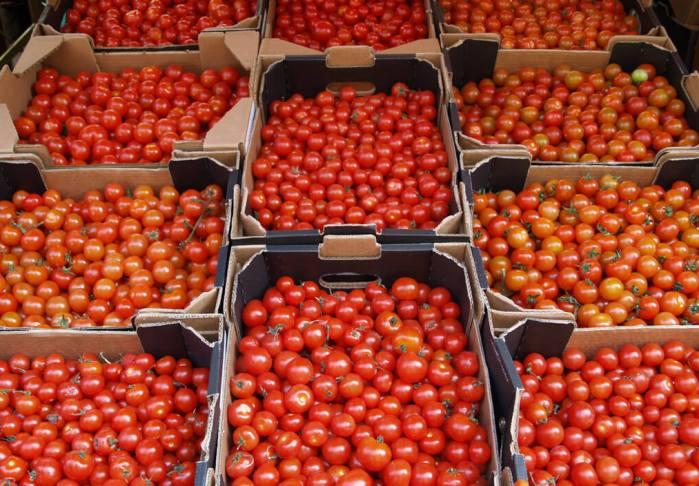
The price of fresh tomatoes has gone up by over 27 percent in the last two weeks in most markets in Lagos metropolis, BDSUNDAY findings show.
Checks around Mile 12, Oshodi and Boundary markets in Lagos on Thursday revealed that a big basket of fresh tomatoes, which sold for between N14,000 and N15,000 in late April, now goes for between N20,000 and N23,000. A 50kg bag of ‘Rodo’, a brand of pepper, now sells for N18,000, up from N15,000 within the same period.
Similarly, a 25-litre gallon of vegetable oil has risen from N13,500 to N14,000.
Biliya Lawal Adam, secretary of Perishable Goods’ section, Mile 12 Market, Lagos, attributed the high price of tomatoes to the ravaging disease Tuta Absoluta, also known as ‘Tomato Ebola’, which has destroyed a huge percentage of the crop in the north-east zone, where most tomatoes are planted.
“We get fresh pepper from three states. Sokoto State is the highest producer of pepper but they are off-season at the moment. We now rely on pepper from Kaduna State and it’s only from one local government in the state that we can get pepper. Sokoto will start harvesting in November/December. The small basket of pepper from Benue that is sold for N3,000 is now N9,000,” Adam says.
“Sokoto State also produces onions but currently they are off-season; we get onions from Jigawa and the onions they produce are not enough,” he adds.
Beyond food items, prices of other items, including toiletries, have also been on the upward swing.
A manufacturer of food products explains that many companies still have a stock of raw materials bought when the exchange rate was higher than N440 to a dollar and are waiting to exhaust them before bringing down prices.
“The major challenge is consistency of this stability. If, for example, supply of dollars remains stable, prices will fall within the shortest possible time. But if there is a disruption, we will go back to the 2016 era again,” the Ikeja-based food maker tells BDSUNDAY.
But not all prices have gone up. A carton of frozen chicken witnessed a slight decline in price from N12,000 to between N10,000 and N10, 500, while that of turkey, which previously sold for N14,000, now goes for N11,400. A 25-litre gallon of palm oil dropped to N12,500, from N13,000 within the same period.











