Nigeria’s penchant for imported commodities was grossly exposed in 2015 by the vagaries in the international crude oil market.
The oil price slide turned many Nigerians into analysts as persons after persons blamed former leaders for not saving enough. The majority of Nigerians mouthed diversification and spoke excitedly on how to save the depleting foreign reserves and the naira.
What was obvious from a litany of analyses, however, was that for a long time, Nigeria, now Africa’s largest economy, has paid more attention to importation of commodities and less to exports and production.
The ‘Consumption Syndrome’ made government after government to subsidise and encourage unbridled import while neglecting the productive and the export sectors of the economy, analysts admit.

The attitude has also been exploited by traditional financial institutions which prefer to lend on short-term basis to importers while disregarding exporters and those in the productive sector, no matter how good their business proposals are, say finance stakeholders.
“A meagre 3.5 percent of bank finance flows to agriculture and 0.2 percent to SMEs, and virtually nothing to exports,” said Godwin Emefiele, Central Bank of Nigeria Governor, who represented by Olaitan Mudashir Adeola, acting director of development finance, at a private sector forum in Lagos last September.
Hence 2015 presented a big challenge to a rent-seeking economy, prompting the CBN to introduce some exchange control mechanisms to preserve the foreign reserves, value of the naira and the economy. Despite criticisms that trailed the exchange control policy of the apex bank last year, one positive was that a new reality dawned on both private and public sector players that unless the country diversified its economic and revenue base, it would go into recession.
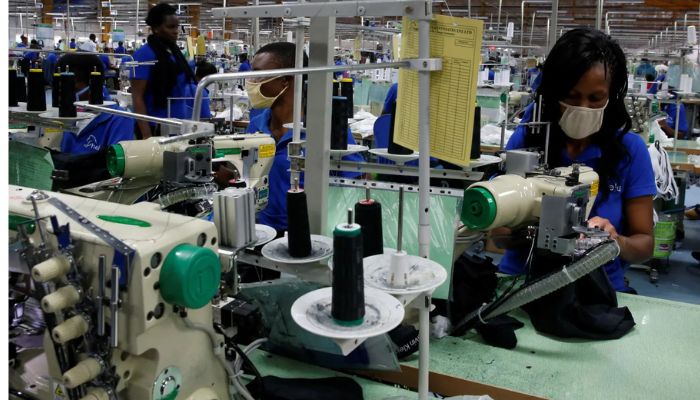
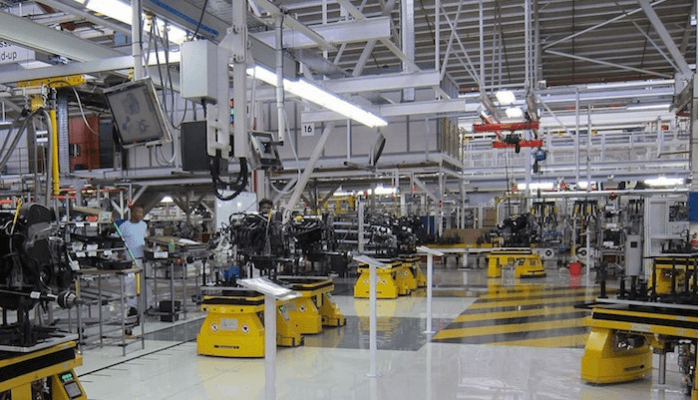
There is now recognition that the manufacturing industry is one key sector that plays a leading role in economic diversification and expansion. Apart from producing what the country consumes to reduce the consumption of what it does not produce, the sector is the largest job creator in emerging economies and its export segment is one sure way of repatriating foreign exchange to reduce pressure on the reserves.
Currently, the National Bureau of Statistics (NBS) data show that the sector is in recession, defined as a state of negative growth in two successive quarters. In 2015, only few investments were recorded in the sector, while jobs were lost in several sub-sectors, especially in iron and steel, rubber/plastics, export, pharmaceutical, chemical and leather.

“There is the need to declare a state of emergency in the manufacturing sector if we are serious about diversification,” said Chigbua Izua, an economy analyst.
Currently, Ajaokuta Steel Complex is still mired in legal controversy, though the Federal Government had pumped in over $5 billion. “Over 85 percent of manufacturing equipment are developed from iron and steel industry. It is unfortunate this is not working,” said Frank Udemba Jacobs, president, Manufacturers Association of Nigeria (MAN).
In June last year, Premium Steel & Mines, owned by Sunil Vaswani and other investors, acquired Delta Steel Company Limited, known as Aladja Steel, from the Asset Management Corporation of Nigeria (AMCON) in an undisclosed deal. But this is yet to fully take off. Aluminium Smelter Company, located in Akwa Ibom State, is also caught in a web of legal tussles between the concessionaire and the government. The closure of this plant pushes manufacturers in the sector into looking outside the country for ingots (raw materials for making aluminium industry).
Infrastructure in the country is still poor. Due to energy challenges, most manufacturers do not rely on public power supply but source their own power amid mounting logistics and transport problems. Bank lending to manufacturers is still about 23 percent on the average, while moving goods to or from Lagos ports has become a headache. The exchange control policy is also sending many manufacturers, who rely on imported inputs, out of business. Many export-oriented companies have shut down as the government refuses to reinstate the Export Expansion Grant (EEG) or pay its backlog.
While still in the early days of 2016, analysts say this year presents an opportunity for policy makers to make clear statements of direction, while also ensuring that the National Industrial Revolution Plan (NIRP) is either implemented or reviewed for execution.