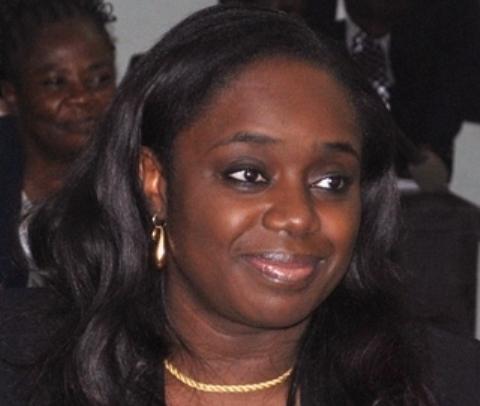
Kemi Adeosun, ministerial nominee tipped by analyst for the finance ministry said the country need to cut its interest rate which will reduce the overall lending rates in other to make investment cheaper.
The Monetary Policy Committee (MPC) of the Central Bank of Nigeria (CBN) in last month monetary meeting unanimously left the MPR unchanged at 13 percent +/- 200 basis points around the symmetric corridor with a 7 to 3 vote.
“Nigeria needs to bring down its interest rate. The biggest drive of interest rate is government borrowing” Adeosun said during the ministerial screen by senate.
She said that the government’s needs to reduce its spending on salaries and overheads from 78 percent of the budget. “The government must increase revenue, spend it better and seek other sources of funding”, she adds.

According to the National Bureau of Statistics (NBS), Nigeria economic growth for Q2, 2015 slowed to 2.4 percent year-on-year, the lowest rate since the country rebased its GDP.
The slowdown in economic growth and other indicators, prompted the Central Bank Governor, Godwin Emefiele to say at last monetary policy committee (MPC) meeting that the economy was at risk of slipping into recession in 2016.
In reaction to the CBN statement, Adeosun said, “the country is currently in a slow down and not approaching recession because the GDP is still growing but the growth must be an inclusive growth to create wealth.”
The Monetary policy makers reduced the cash reserve requirement from 31 percent to 25 percent to see that banks invest more in critical sectors such as agriculture and mining which will help drive growth and reduce unemployment.
“We need to set targets for ourselves to increase revenue, introduce better cause that will encourage audit compliance and create other source of funding by doing public private partnership to achieve a better mix between recurrent and capital budget.”

Infrastructure
According to the African Development Bank (AfDB), Nigeria’s core stock of infrastructure is estimated at only 20-25 per cent of GDP, compared with 70 per cent for other middle income countries of its size, leaving a gaping infrastructure deficit of $300bn.
This infrastructural deficit has made the nation to suffer low levels of productivity.
Many roads are totally impassable after few days of heavy rainfall cutting off some communities completely from being accessed. Even when commuters offer to pay higher fares, many commercial motorists refuse to go to such communities for fear that their vehicles would sink.
Adeosun added that constraints holding business from growing is infrastructure. The country is not going to create jobs if the roads, power rails are not working.
“Nigeria needs to stimulate the economy by investing in infrastructure that will help the nation avoid recession,” She said said.
Adeosun, whose nomination was approved by the Senate on Wednesday, has degrees in economics and public financial management from universities in London, according to her LinkedIn profile. She worked for PricewaterhouseCoopers LLP in London and at Chapel Hill Denham Ltd., a Nigerian investment bank, before becoming finance commissioner of Ogun state in 2011.
Ogun state is the seventh smallest economy of Nigeria’s 36 states, according to Renaissance Capital.
Josephine Okojie