The Federal government is partnering the Deutsche Gesellschaft für Internationale Zusammenarbeit (GIZ), European Union and United Nations Industrial Development Organisation (UNIDO), to implement a N4.2 billion competitiveness project which sets to boost trade and enhance productivity, especially in Nigeria’s non-oil sector.
Launched in Abuja on Monday, the project, Nigeria Competitiveness Support Programme (NCSP) aims at improving the competitiveness of the Nigerian economy in the non-oil related sectors, thereby creating jobs and reducing poverty.
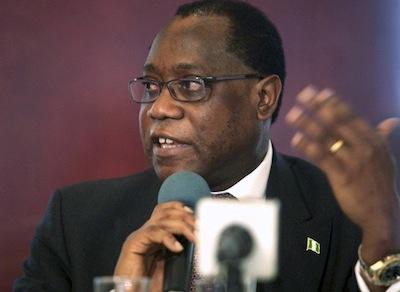
The minister of Industry, Trade and Investments, Olusegun Aganga, who launched the programme said it has three pillars including the effective management of trade policy and trade facilitation through strengthened trade support institutions in Nigeria.
The other two components are support for improved business and investment environment through regulatory reforms; and establishment of National Quality Infrastructure (NQI) to improve the quality of products and services, as well as enhance the level of protection for consumer rights.

Launching the programme, Aganga observed that it addresses key pillars necessary to move Nigeria beyond oil. He also said it strongly aligns with Nigeria’s Industrial Revolution Plan (NIRP) which addresses issues that have held back the Nigerian non-oil sector for years, while pushing government’s policy on economic and revenue diversification.
“The Nigerian Competitiveness Support Programme (NCSP) further pushes the nation’s industrial revolution plan (NIRP) which addresses the high cost of funding in Nigeria, builds up industrial infrastructure and power, provides industrial skills, links innovation and industry, improves investment climate, strengthens products standards and promotes local patronage,” Aganga said.
Aganga is hopeful that with the implementation of the policy, the nation will improve its current rankings in global competitiveness and push up industrial productivity, utilisation, cut down cost of doing business, while higher paying jobs will be created.
He said the programme would help Nigeria develop a fully operational national quality infrastructure which will include, development of a national quality policy, facilitation of strong accreditation bodies in Nigeria, enhancement of national meteorological standards, and promotion of conformity, assessment and monitoring systems.
UNIDO will be executing this under the programme as part of their national quality infrastructure initiative.

On the investment climate, which is the last part of the programme, he said it is essential that Nigeria’s regulations, laws and policies make it easy for businesses to set up and operate in the country.
The minister further observed that the world is increasingly becoming competitive and that a nation’s investment climate is sometimes the key reason a company decides to set up in one country over another.
According to him, this reality is part of the reasons that the government under the NRP, beginning October 2013 slashed the cost of business and capital registration for small businesses by 60 per recent and 25 percent for large businesses.
In his welcome address, EU Ambassador to Nigeria – Michel Arrion, noted that it was necessary to support Nigeria’s effort at improving competitiveness, especially in the non-oil sectors
According to him, total reliance on oil will not be sufficient to develop an additional fabric to provide the needed jobs in country.
“The EU attaches a great importance to its relations with Nigeria as an important political and economic force in West Africa and a key player on the African continent and is willing to assist Nigerian leaders in improving the living conditions of all Nigerians,” Arrion noted.
He was optimistic that the NCSP would help improve the quality of Nigeria’s products for Africa’s regional market as he also disclosed that ownership and coordination are key components in the implementation.
By: ONYINYE NWACHUKWU